
MTV was only three years old when the 1st Annual Video Music Awards Show aired in September 1984. The affair was hosted by Dan Akroyd and Bette Midler, who in hindsight, were far from the target demographic. But consider this. Back then, the channel was still struggling to define itself. Apart from airing music videos 24/7, it had to live and breathe it as well (which is more than what can be said about today’s Ridiculousness). Point being, it had to create a culture. So, for that, they needed specials, and those specials needed performers. More specifically, they needed killing openers.
In contrast, Madonna had been around much shorter. Only a year before, she released her self-titled debut, which uncannily produced five hits. As a result, she was quickly hailed for reviving the dance genre at a time disco was gone for good. And she did that while still embracing aspects of the faded genre. So understandably, she was the woman of the hour. More importantly, she already knew her schtick, which was remarkable for any act that’s “shiny and new”.
So, into New York City’s Radio Music Hall she came that evening, an evening that technically wasn’t hers. Up for nine Moonmen that night was Cyndi Lauper, who spearheaded a movement on girls just wanting to have fun. But the first big winner was The Cars for You Might Think, not even MJ’s Thriller, considering how legendary that’s become.
As for Madonna, she was merely up for Best New Artist for “Borderline”. Outside of that, she was still functionally a special guest. Still, down that multi-layered wedding cake platform she descended, leaving behind that creepy groom mannequin with the blank stare, and singing that she’d made it through the wilderness. Somehow, she made it through.
But apart from the yet-to-be-released ditty, it was the overall aesthetic that had the crowd squinting. Clearly, the bit lampooned Western wedding traditions, from that humongous cake platform to her mock wedding dress, custom-made by her stylist Maripol. Completing her look was her now-iconic Boytoy belt.
Categorically, it was a disastrous number, as she lost a shoe upon landing on the stage floor. But as she shared in a 2015 Howard Stern interview, she had to milk the situation. There was no other choice. So, instead of trying to recover the loose stiletto, she dropped onto the floor and made it part of the act. It became one of pop culture’s greatest adlibs, which in turn led to a legendary wardrobe malfunction.
As she continued rolling on the floor, her dress crept up, exposing her lingerie to thousands (TV viewers not yet counted). And go figure, the cameras stayed with her instead of cutting away. Still, on she went, adding humps to her choreography, while undoing her veil in the process. By then, the performance became akin to striptease, leading Midler to quip about “the burning question of Madonna’s virginity” being answered.
At first, her then-manager Freddy DeMann was livid and thought that the provocative moves ruined her career before it even took off. But that was exactly the boost they needed. The performance broke more headlines than the actual winners. And, just like that, “Like a Virgin” was introduced to the world.
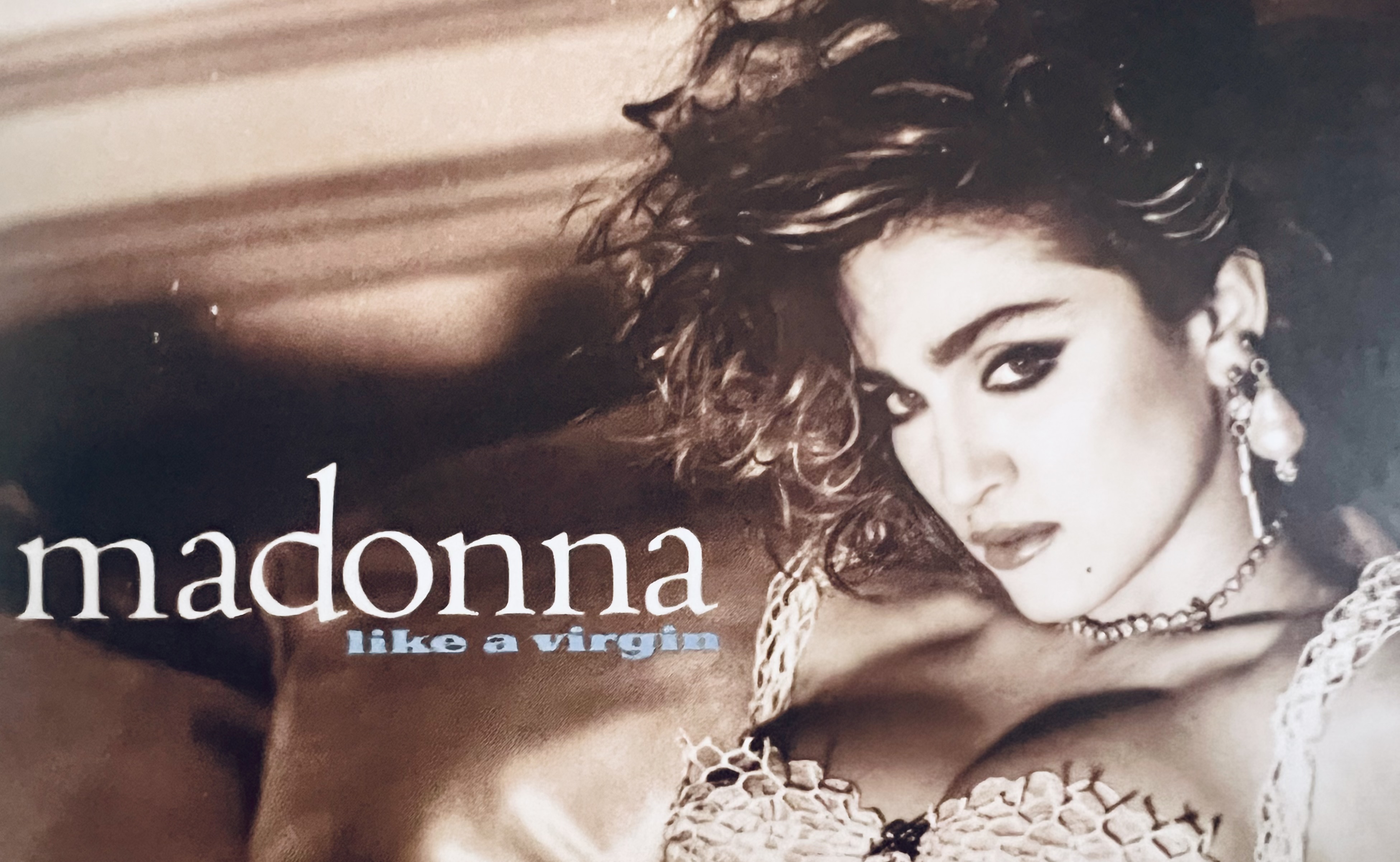
Eventually, the song followed the lead of its First Album predecessors and broke both Billboard’s Top 100 and Dance Club Songs charts. Little did everybody know that it would be the title of her second album, released two months later.
With the title track still making rounds, “Material Girl” was released as the album’s second single in November 1984. Being the opening track of her sophomore effort, it encapsulated Madonna’s playful persona. It also introduced a new side: as a hard-to-please young woman who yearns for the finer things. Aptly enough, the music video was a parody of Marilyn Monroe’s “Diamonds are a Girl’s Best Friend” from 1953’s Gentlemen Prefer Blondes, but with a twist: she ends up with the poor guy instead.
With its catchy synth hooks and repeated chants, the song easily became another chartbuster and became her highest ranking Top 100 hit at the time. The title also became one of her many monikers.
The second track, “Angel” followed suit several months later. But, while it achieved its fair share of chart success, it was deemed a rather underwhelming follow-up. Come to think of it, that’s where this second album pales in comparison to the first. While the eponymous debut was generally regarded as spotless, the follow-up had more noticeable filler.
Yes, the Italian release “Over and Over” was catchy, and her cover of Rose Royce’s “Love Don’t Live Here Anymore” gave a glimpse of her balladeer side. But neither delivered the same resonance. The same can be said for the album’s closing tracks, “Pretender” and “Stay”, which sound like afterthoughts to “Shoo-Bee-Doo”, the best non-single (on the other extreme).
Fortunately, the hits came coming. By 1985, Madonna had ventured into movies and did a cameo in the critically-maligned Vision Quest. While it bore no connection to the album at all, the song became noteworthy as the first Madonna ballad to be released as a single. Unfortunately, she’d end up shunning the song for decades because of its apparent connection to her ex-flame, Sean Penn. It took the Manila leg of 2016’s Rebel Heart Tour for her to acknowledge its existence again.
Her crossover to the silver screen continued that same year with her first starring role in the comedy Desperately Seeking Susan. To coincide with that milestone, “Into the Groove” was added as a bonus track in subsequent international releases of the album. Despite not having an American release, it became a huge global hit and became her first UK #1.
The album eventually ended its run with “Dress You Up”. While it still couldn’t hold a candle to “Like a Virgin” and “Material Girl”, it still performed respectably in the charts and became her sixth consecutive Top Ten hit in the US. The music video, however, merely used clips from her first major concert, The Virgin Tour. With music videos being all the rage then, that call seemed to suggest that she was running out of steam early. Obviously, that wasn’t the case. If anything, her track record proved she’s already a fixture.
 Planet Chuckie