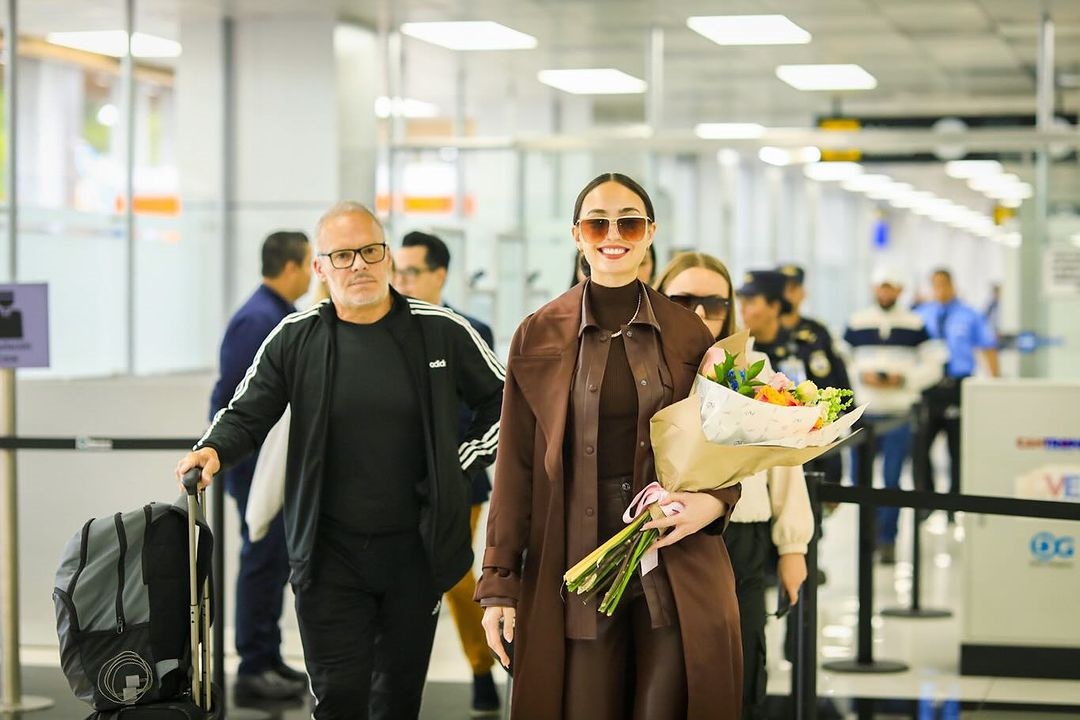
When JKN Global Group, headed by Anne Jakrajutatip, took over the Miss Universe franchise in late 2022, we assumed Thai stagings as the future norm. We don’t discount that possibility just yet, but one of the bigger surprises in the previous telecast was when El Salvador’s president, Nayib Bukele, announced his country as the next host in a brief pre-recorded teaser.
Random as it seemed last January, it wasn’t a complete jaw-dropper. Bear in mind, the Land of Volcanoes did welcome the pageant to Central America in 1975. It was an edition surrounded by student protests and political unrest.
Of course, fans remember that year for different reasons. It was the first edition to surpass the 70 mark, with all US territories represented. That included Northern Marianas which, debuted under its region “Micronesia“. The UK still sent three of its constituent countries separately, with only England‘s Vicki Harris making the cut. And El Salvador‘s own Carmen Figueroa proved to be such a warm and gracious host, that she earned her country its second placement at the time.
The final five comprised of the usual suspects (at the time) and one refreshing underdog. 4th Runner-Up was the Philippines‘ Rosemarie Singson Brosas, who served as an usherette in the Manila pageant the year before; 3rd Runner-Up was Sweden‘s heavy favorite Catharina Sjödal, whose lower ranking was met with extreme (and audible) disapproval; and 2nd Runner-Up was USA’s Summer Bartholomew, the third local titleholder from California. Prior to that night, Haiti‘s Gerthie David was hardly even considered a possibility. Yet, perhaps, it was her mystifying aura, quiet confidence, and cool poise that had the judges intrigued. She finished 1st Runner-Up, a feat that would eventually be mirrored by Racquel Pelissier in Manila 41 years later. In the end, it was Anne Marie Pohtamo’s classic Nordic beauty that prevailed, making her the second titleholder from Finland. Only three of those five countries are represented this year. Sweden was last seen in the 2021 edition, while Haiti withdrew after making the cut last year.

The country’s defining moment, however, happened in the early years of the contest. In 1955, Marilyn Monroe doppelganger Maribel Arrieta became the first hispanophone to reach a lofty placement. She was 1st Runner-Up – a feat that soon surpassed by Peru‘s Gladys Zender, who bagged the crown two years later.
So, point is, El Salvador does constitute a major chapter in MUO’s history, even if it only managed to place twice subsequently (and consecutively, in 1995 and 1996). It’s hardly a major player prior to today. But whatever the case, we could really use seeing more global backdrops. It’s an international event, after all.
This 72nd edition was preceded by radical changes, as if the previous one didn’t already set the tone. The first quarter saw Khun Anne shaking up the license holder status quo, which caused the dropout of several mainstays like Belize, Ghana, Indonesia, Vietnam, Malaysia, Cambodia, Mauritius, and even recent returnee, Seychelles. That also meant local pageants were no longer allowed to integrate Miss Universe with other brands. In our country’s case, that led to the creation of The Miss Philippines pageant under the same group. This drive for uniformity might partially explain why some of the local pageants were streamed on Miss Universe’s YouTube page – namely, Bolivia, Chile, Malta, and Nicaragua, just to name a few. As for the countries who lost their franchises, not all of them managed to return this year. On the bright side, we do welcome back a few erstwhile absentees.
More significantly, there’s the drastic overhaul of eligibility rules. Wives and mothers are welcome once again (as they were in the early 1950s) and the age limit is now a thing of the past. And while we’ve seen doors open for transgenders and plus-sized women before, those boundaries are pushed even further this year.
Inevitably, not everyone has been receptive to those developments and the arguments aren’t expected to cease. The reality, however, is that standards and world views evolve. For something long-standing to survive, it’s vital to ride along and process these changes internally. And to revert to a tried-and-tested cliché: the show must go on.
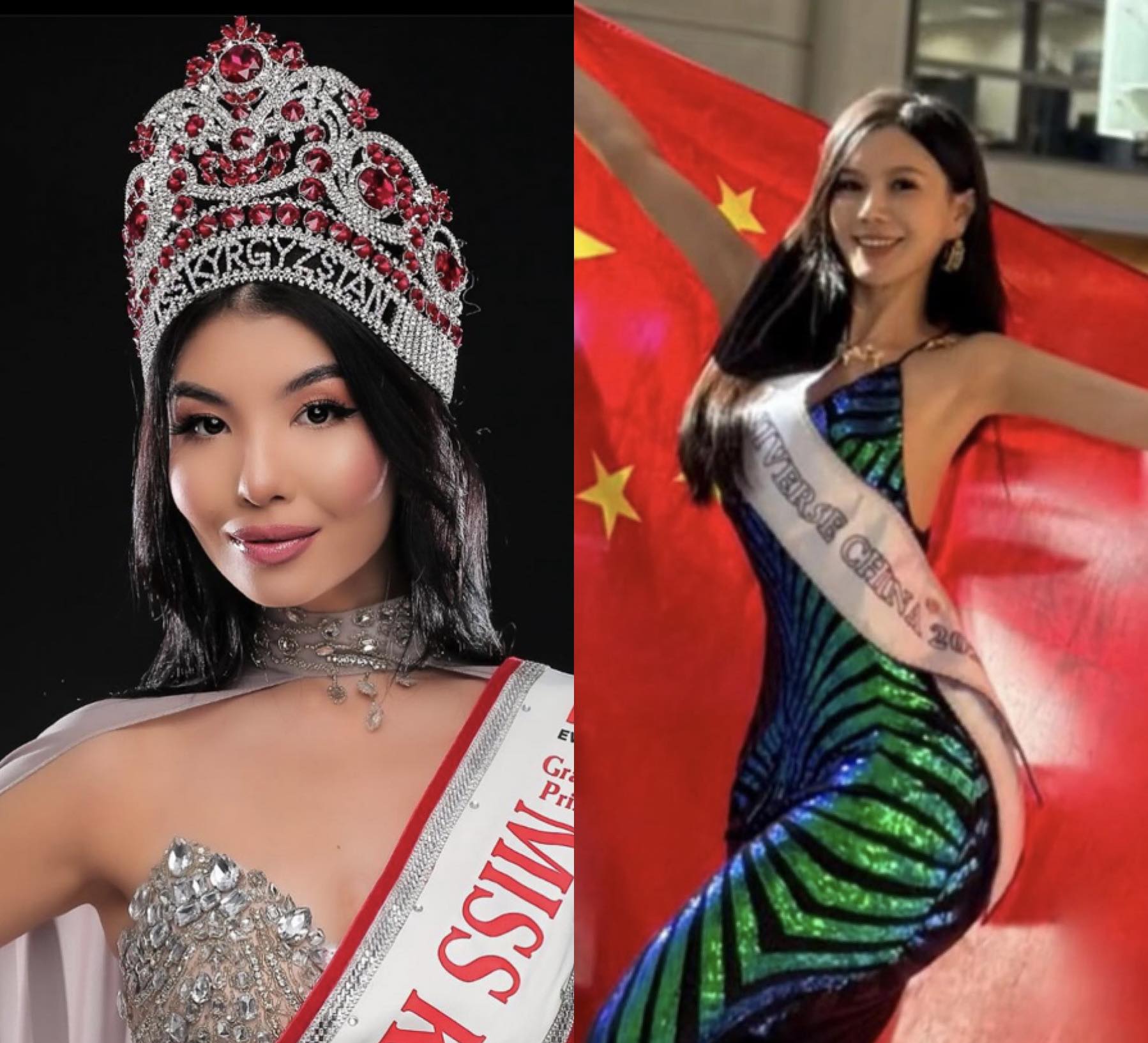
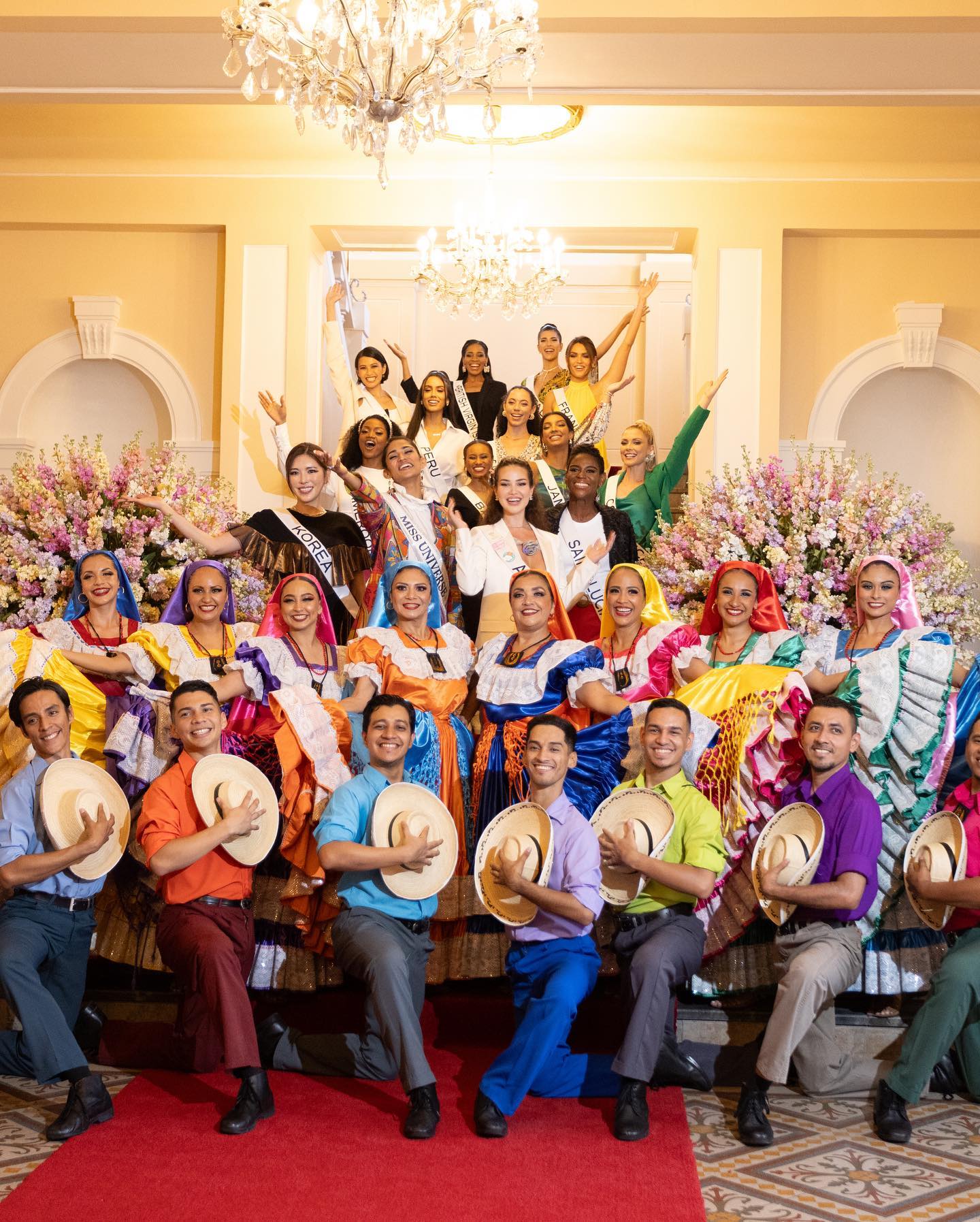
86 contestants were initially slated to compete, but two dropped out along the way. There’s Kyrgyzstan’s Akylai Kalberdieva, the replacement delegate’s replacement delegate, who ended up not leaving for El Salvador altogether. And, for the second year in a row, visa problems delayed the departure of China’s delegate. If last year’s Sichen Jiang arrived on time for the preliminaries, this year’s entrant, Jia Qi, wasn’t as prompt. For now, she’ll settle with being a live audience member and defer her participation to next year instead. This brings the total count to 84, including 10 returnees and one newsworthy debutante – not a bad turnout, considering there were only seven of them as of last May.
Per tradition, this year’s roster will take in the usual preliminary competition, closed-door interviews, and the national costume presentation. In addition, this year marked the introduction of the Voice for Change contest. It’s a collaboration between crown sponsor Mouwwad and the communication platform CI Talks, where candidates were made to submit three-minute videos that detail their respective causes. Think of it as this contest’s answer to Miss World’s Beauty with a Purpose projects. The only difference is this doesn’t really contribute points, but it will likely enhance perception or even the fighting chances of each participant. The three winning presentations will be revealed on coronation night.
COMING NEXT: An overview and assessment of this year’s candidates, presented according to 2017-2019’s continental groupings
 Planet Chuckie