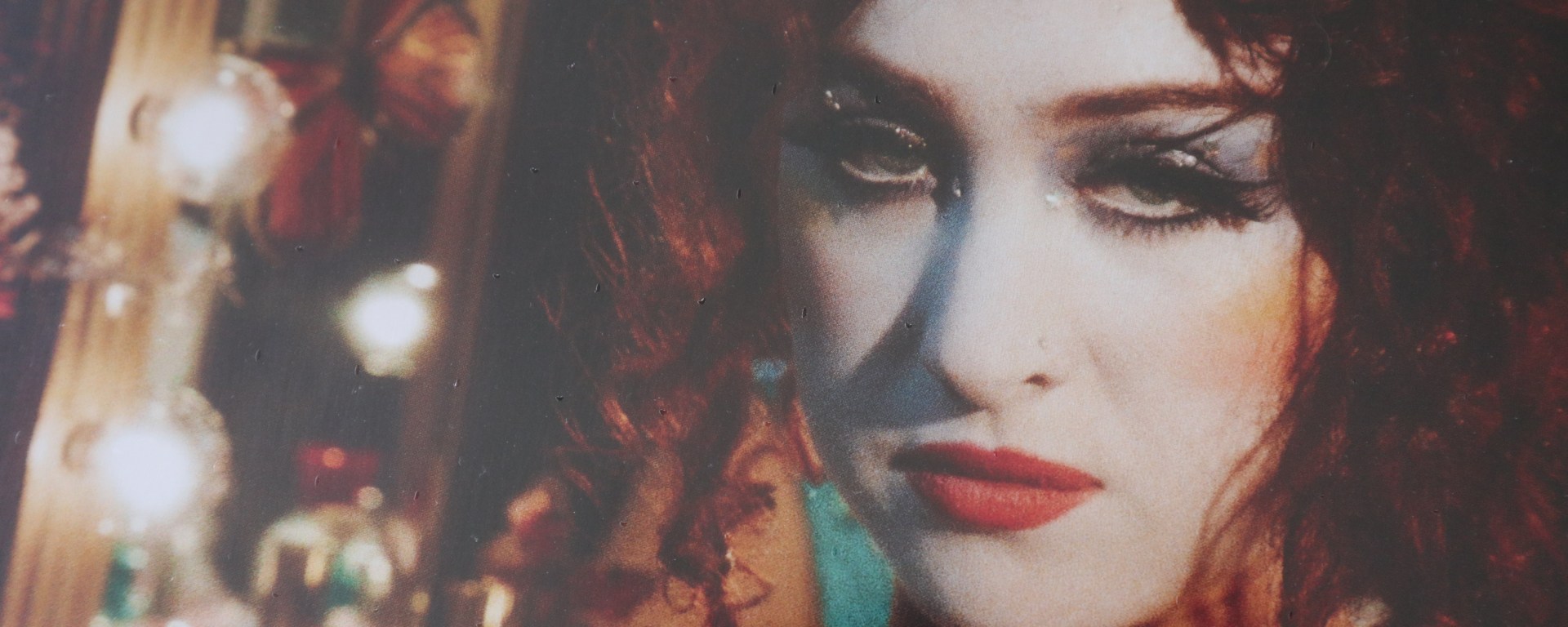
If she wasn’t a New Artist, she would have left empty-handed. That was the implication with Sabrina Carpenter besting her in the Pop categories and Kendrick Lamar nabbing Record and Song of the Year. But even then, it was an incredible night for Chappell Roan, who stole the show with her spectacular performance of “Pink Pony Club”. That in itself was already a historical moment, especially with several high profile guests singing along. And, luckily, she did take the stage once more.
The eclectic singer entered the race with five other nods – two for her first studio album and three for her standalone 2024 single, “Good Luck, Babe”. However, it was her totality as a breakthrough act that scored her the statuette. And, just like that, her Grammy debut felt more complete.
As she took the podium to receive the award from Victoria Monet, any expected her to be tongue-tied like Billie Eilish in her debut sweep or candid like St. Vincent in the pre-show hours before. Sure, her moment still fit both descriptions. But, judging from her recent episodes with unruly photographers, she’s not one to mince words – such feistiness for a Pisces, some have said. True enough, when she opened that Moleskine, jaws started dropping, just like the conical hat she wore all night.
In her impassioned speech, she addressed record labels, and in the process, she alluded to her own struggles as a fledgeling artist, particularly during the pandemic. She went:
“Labels and the industry profiting millions of dollars off of artists would offer a livable wage and healthcare, especially to developing artists because I got signed so young, I got signed as a minor, and when I got dropped, I had zero job experience under my belt. I had a difficult time finding a job during the pandemic and couldn’t get health insurance…”
When she completed her bit with “Labels, we got you, but do you got us?”, the crowd went wild. It was the rawest, most visceral speech of the evening. It wouldn’t surprise if even her radio clown posse was also in awe.
++++++++++
Born Kayleigh Rose Amstutz in Willard, Missouri, where she had a very conservative upbringing. Her musical inclinations manifested in her tweens. By 10, she was already playing the piano and, by 13, she already began performing publicly. That led to an unsuccessful attempt to audition for America’s Got Talent. Nevertheless, the passion kept ablaze.
By 15, she was uploading covers in her YouTube channel. Having always expressed displeasure towards her given name, it was in 2016 when she took on her famed pseudonym, after her late grandfather, Dennis K. Chappell and his favorite song “The Strawberry Roan”. Concurrently, a new persona emerged and her original piece “Die Young” finally brought her attention.
In 2017, she was signed by Atlantic Records, through which she released her first single “Good Hurt”, from the EP “School Nights”. That’s when she started catching attention of critics, who commended the maturity and depth of her vocals. A year later, she moved to Los Angeles to expand her horizons. While she certainly felt more liberated, she struggled to stay visible in the scene until the pandemic struck.
By August 2020, four months after she released “Pink Pony Club” as a single, she was dropped from her label. Nonetheless, the song continued having considerable airplay and the songs kept coming.
Eight singles later, she finally completed her studio debut. The Rise and Fall of a Midwest Princess was released in September 2023. Though critically praised, commercial reception was tepid at best. It wasn’t until her front act stint for Olivia Rodrigo’s Guts World Tour and her appearance in Coachella, when the album gained belated traction. It was in June 2024 when Midwest Princess finally broke the charts, with six of its singles joining her first chartbuster, “Good Luck, Babe” in the Billboard Hot 100. Clearly, it had amassed a cult following. As the album’s first anniversary loomed, so did its long-awaited vinyl release.
++++++++++
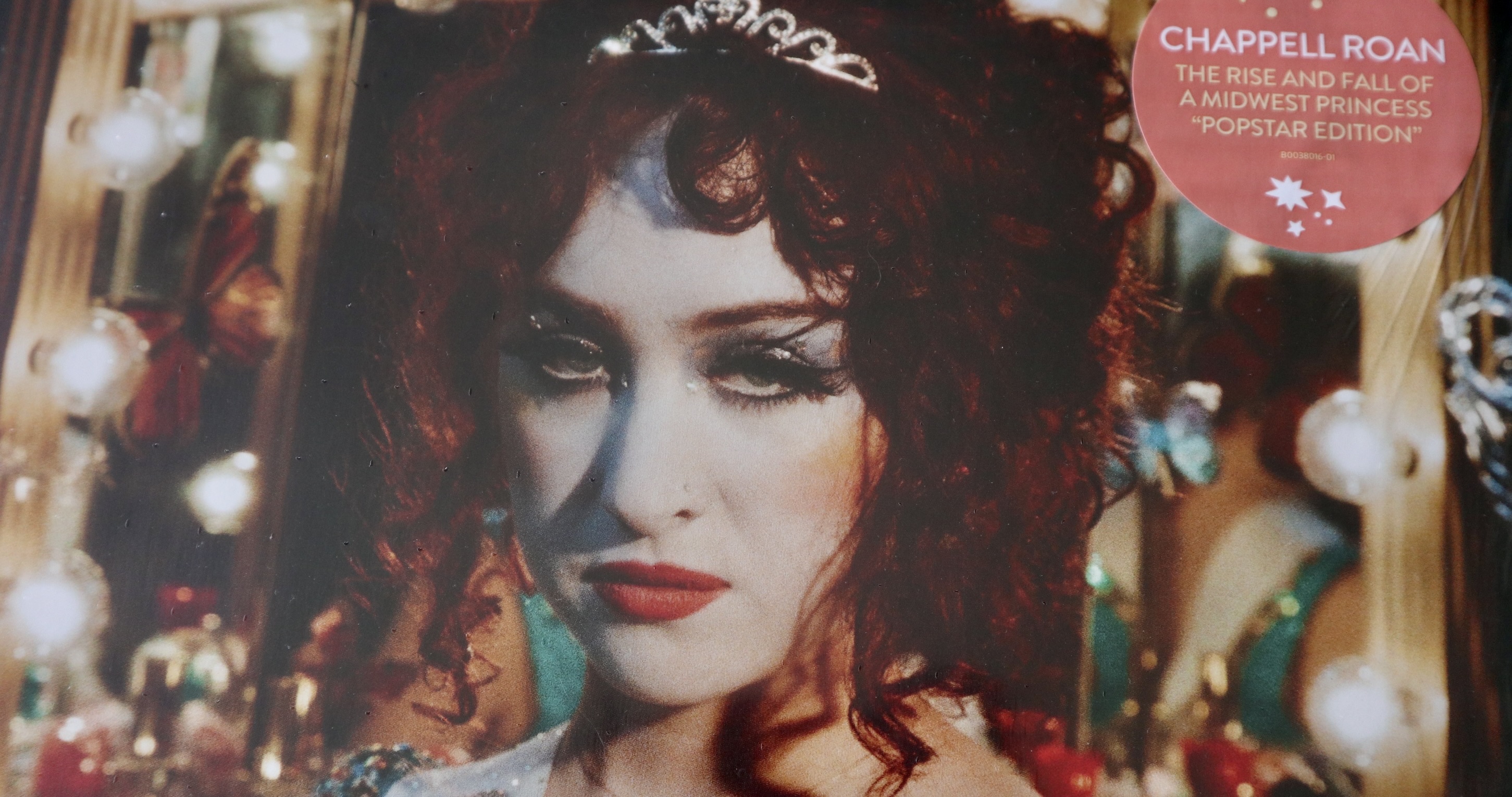
“Popstar Edition” means there are other editions, though the distinction is only implied. Compare that to more deluxe releases where the colorful, and sometimes see-through, LPs reflect the technicolor vibrance of the artist. Judging from the standard black LPs and lack of a lyric sheet, it’s the basic release.
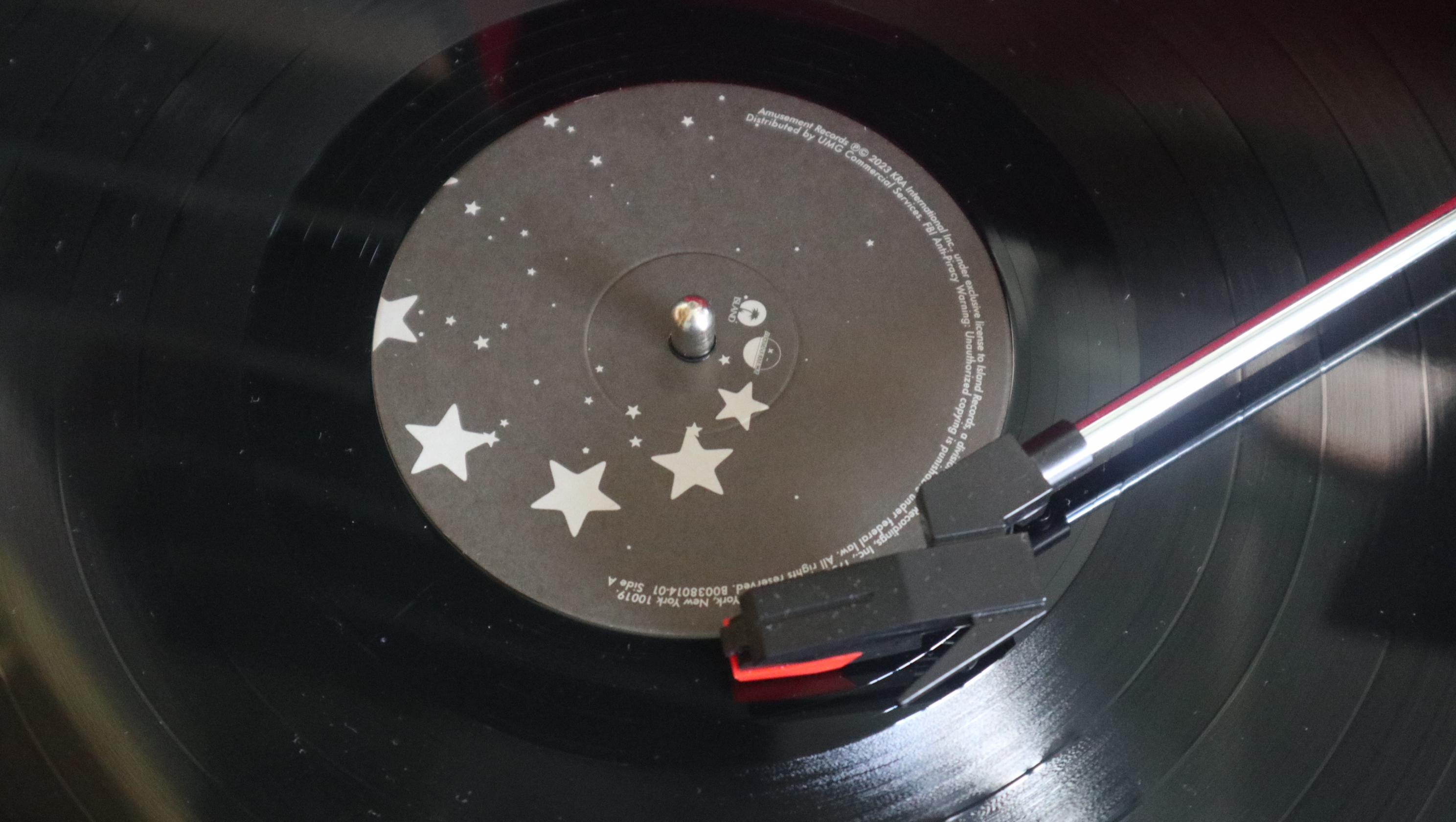
The 14 tracks are split into two LPs, with Side D of LP2 left blank. It begs the question of why the tracks weren’t evenly distributed. But, then again, those aren’t very lengthy cuts. That, and they might have followed a pattern.
Each side of LP1 begins with a danceable track and ends with a ballad. Side A, for instance, begins with a one-two-three punch of catchy alt-pop ditties. It begins with the rambunctious “Femininomenon”, followed by the flirtatious “Red Wine Supernova” and the provocative “After Midnight”, then slows down with “Coffee” and “Casual”.
Side B, is arguably, the strongest set. It starts with “Super Graphic Ultra Modern Girl”, the single released concurrently with the album and, in my reckoning, the most party-worthy cut. It’s then followed by the immensely popular “HOT TO GO!” and “My Kink is Karma”, before taking on a solemn tone with “Picture You” and “Kaleidoscope”.
With all danceable tracks crammed in the first half, Side C no longer adheres to the said pattern. The history and Grammy mileage of “Pink Pony Club” make it the most interesting track in LP2. Apart from being the best showcase of her vocals, it’s the closest she gets to being autobiographical, as it mirrors the singer’s small town-to-big city narrative, but with Tennessee replacing Missouri as the referenced home state. “Naked in Manhattan” is still upbeat, but not as club-worthy as its precursors. As the chronological first single, it’s now relatively overshadowed by the bigger hits. The contemplative penultimate track “California” acts like a seeming antithesis to “Pink Pony Club”, which celebrates finding one’s element in liberation. Here, she sings of pining and homesickness. She still honors her roots, after all. With “Guilty Pleasure”, the album ends with a slight whimper, but that’s not necessarily a bad thing. While the preceding track overflows with longing, this one elevates the tempo once again, as if surrendering to the world she now belongs.
++++++++++
As Chappell Roan continues to give pop music a bold, painted, and glitter-splattered face, we can only hope that album title’s no self-fulfilling prophecy. Despite her aversion to her own fame, this Midwest Princess is still very much on the Rise. She’ll inevitably pull more tricks.
 Planet Chuckie