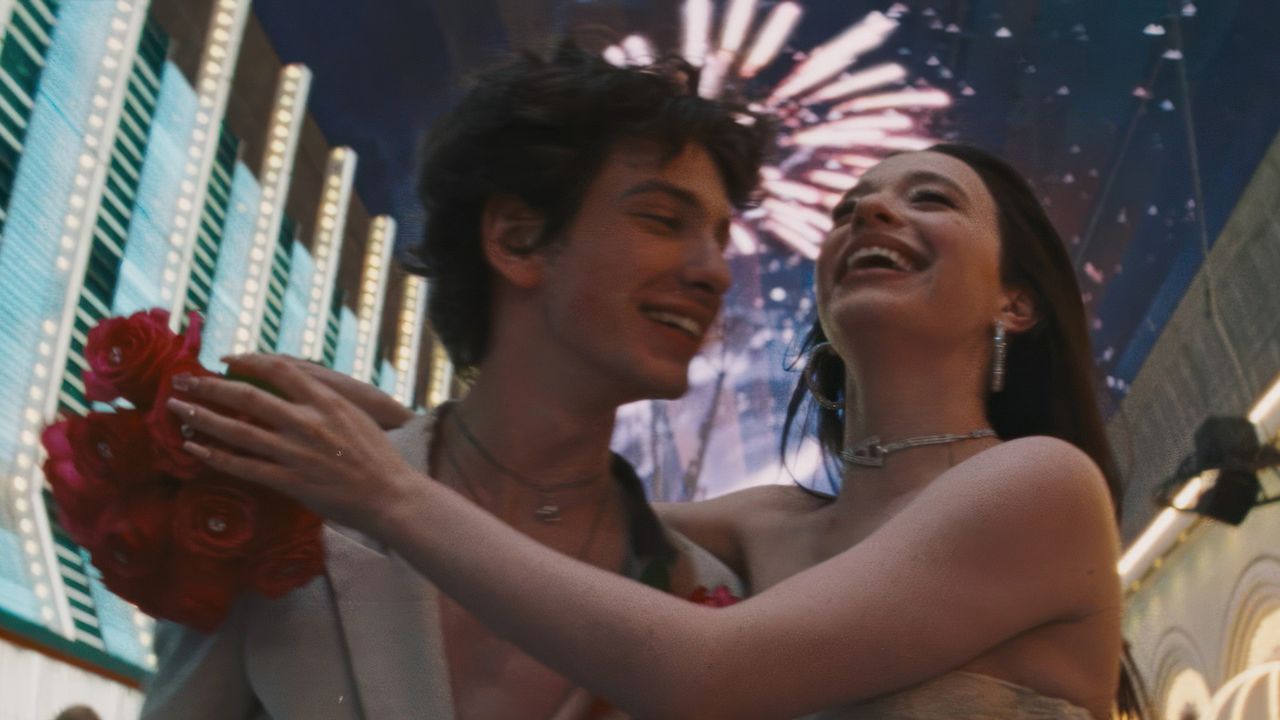

As a filmmaker, Sean Baker always had a knack for the unthinkable. 10 years ago, he shot the entirety of Tangerine with three smartphones, a creative decision which surely raised purist eyebrows then. But, nevertheless, it was revolutionary, despite the minimal fanfare the film received. His 2017 follow-up, The Florida Project, received slightly more mileage, mostly thanks to Willem Dafoe. His supporting performance earned nods, but that’s about it.
Much as Baker remained active since, he substantially stayed under the radar. That was, until, he saw Quentin Tarantino’s Once Upon a Time… in Hollywood in 2019, where a relative unknown by the name of Mikey Madison caught his attention. The then-newbie was only 19 when she played a member of the nefarious Manson family. It was a bit part, yes, but her intensity was impossible to ignore. So much so, that when the Scream reboot hit screens in 2022, Baker knew he had to work with her. And that, he did. As he began work on a screenplay inspired by Russian-Americans based in New York, she was immediately top of mind. He didn’t even require her to audition. And, lo and behold, she more than shines as the titular stripper. She blazes.
With a budget of $6 million, Anora is Baker’s most expensive production to date – a colossal leap from Tangerine’s $100,000 in 2015. It’s also, consequently, the richest in detail, as it highlights the exploits of a young sex worker entangled with the filthy rich. See, Baker always had a soft spot for underdog stories. Here, the power imbalance is more than crystal clear, and it’s all given edge by Baker’s editing.

The film is named after the main character, which is ironic, since she hates being addressed by that. Instead, Anora Mikheeva prefers the more Western-sounding nickname “Ani”. It’s a telling nuance, when someone who bares her body for a living can’t stand baring her inner core. Something isn’t being addressed, or, for that matter, being confronted. Still, it’s the only way she earns. And, at only 23, she is toughened by her travails, with every trace of her Russian heritage diluted by her thick Bronx accent. We’re shown those aspects of that sordid life, to the tune of Take That’s “Greatest Day”. It’s a perplexing song choice to hear over Drew Daniels’ seedy visuals, but, obviously, the line “Let’s make a new start” could go several ways. Clearly, a transformation beckons.

Hope comes in the person of Ivan “Vanya” Zakharov (Mark Eydelshteyn), the son of wealthy Russian oligarchs and Ani’s junior by two years. He hires Ani’s services for a full week and, much to her shock, subsequently seeks her hand in marriage. Though doubtful at first, Ani soon takes the gesture as true love and, moreover, a ticket to a better life. But, there are red flags, of course. Ivan wants it for the green card, for one. And, despite being stationed in New York by way of his studies, he squanders his time and resources partying and playing video games in his parents’ Brooklyn mansion. Nonetheless, Ani accepts, flies to Las Vegas to get hitched, and soon joins Ivan in his fantasy world. It’s all fun and games until word reaches overseas.
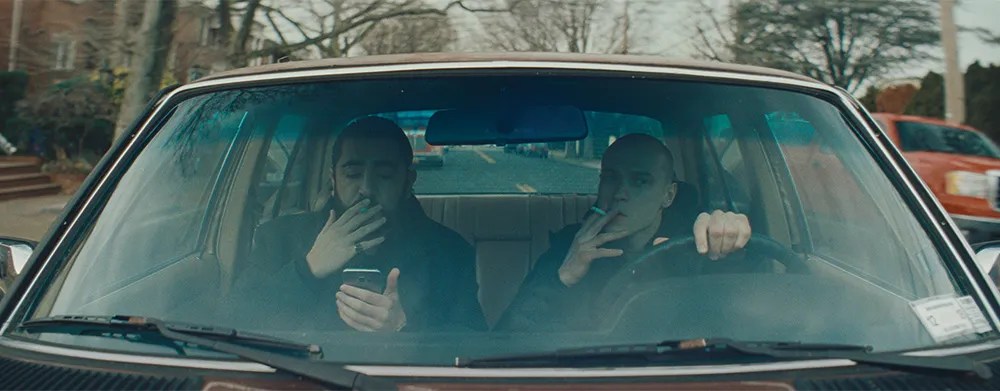
Distraught by the news of her son’s marriage, Ivan’s mother summons his Armenian godfather, Toros (Karren Karagulian), to intercept the couple and coerce them to annul. He in turn sends his two bumbling accomplices. There’s Toros’ recovering alcoholic brother, Garnik (Vache Tovmasyan), and the bashful henchman, Igor (Yura Borisov), who’s so good-natured, you’d wonder why he’s with them. Ivan flees on the spot and disappears. That leaves Ani in the trio’s custody, which isn’t the most pleasant thing, given the firecracker she is. And, boy, does she raise a fit. The pursuit that follows is deliciously entertaining, throwing in different elements from intriguing mystery to side-splitting slapstick. They all need to locate Ivan for conflicting reasons. Toros and posse need to obey orders. While Ani still wants to salvage the marriage. In the process, we’re reminded that t.A.T.u. once existed.
It all becomes Sociology 101 by the penultimate act. As the parents (Aleksei Serebryakov and Darya Ekamasova) arrive, issues like class divisions, cultural differences, and family toxicity are touched as the tension reaches fever pitch. The realization finally hits Ani and, once again, she’s forced to stand up for her dignity, probably even more fiercely than ever.
At that point, the film morphs into an unlikely inspirational piece, with a confrontation that’s categorically reminiscent of Julia Roberts’ Vivian Ward luxury store scene in Pretty Woman. There will be cheers. The main difference: this is neither a rom-com nor a modern-day fairy tale. Sympathy will be the takeaway, despite hints of a positive turnaround.
We’re left uncertain about how to make out the ending. In the first place, we’re not supposed to. One thing’s for sure, Ani’s not a heroine in the strictest or even moral sense, but she’s, at least, a fighter. Sometimes, that’s more than enough reason to root for the lead, even if you don’t end up condoning her actions. That’s where Mikey Madison truly excels, in making a character so lovable amidst all her ambiguity and callousness.
We can’t really call the film Baker’s breakthrough, given that he’s been at it for 25 years. This is more like an overdue high point, after years of churning out underrated gems. The fact that a star was born in the process? That’s the added bonus.

 Planet Chuckie