

It’s not a Bollywood production, but a co-production among five countries. India’s on board, of course. It joined forces with France, with Italy, Luxembourg, and the Netherlands also chipping in. Yet, despite all the acclaim and the splash it made in Cannes, none of those countries fielded it in Oscar’s International Feature race this year, a decision that bewildered many. In its stead, India submitted Laapaata Ladies. And, curiously, France sent a Spanish-language entry: the popular yet polarizing Emilia Pérez– much to Mexico’s chagrin, but that’s another story.
Fortunately, the film still managed to salvage its awards season prospects. Most notable, perhaps, was Payal Kapadia scoring a Golden Globe nod for Best Director. At 39, she’s certainly one to watch, given that this is only her second feature and first narrative. And nomination flubs aside, the glow of “All We Imagine As Light” cannot be dimmed.
Set in the thick of Mumbai, it can easily be taken as an ode to the city. It still is for the most part, as anonymous voiceover narrators open the film with their sentiments, consensus being: it’s definitely no Utopia, but it’s home. Those recollections are later wondrously brought to life through Ranabit Das’ cinematography, from the gridlocked streets to the crowded trains. Still, the film doesn’t take forever to reveal its essence. It’s a straightforward, yet captivating story of three friends.

The tale focuses on three hospital workers, two of whom are nurses living in the same messy flat. The uptight Prabha (Kani Kusruti) longs for her German-based husband. Yet, save for receiving a mystery gift, she hasn’t heard from him in months. Free-spirited Anu (Divya Prabha), on the other hand, is dating a Muslim man, Shiaz (Hridhu Haroon), a fact she hides from her strict Hindu family and her conservative roommate.
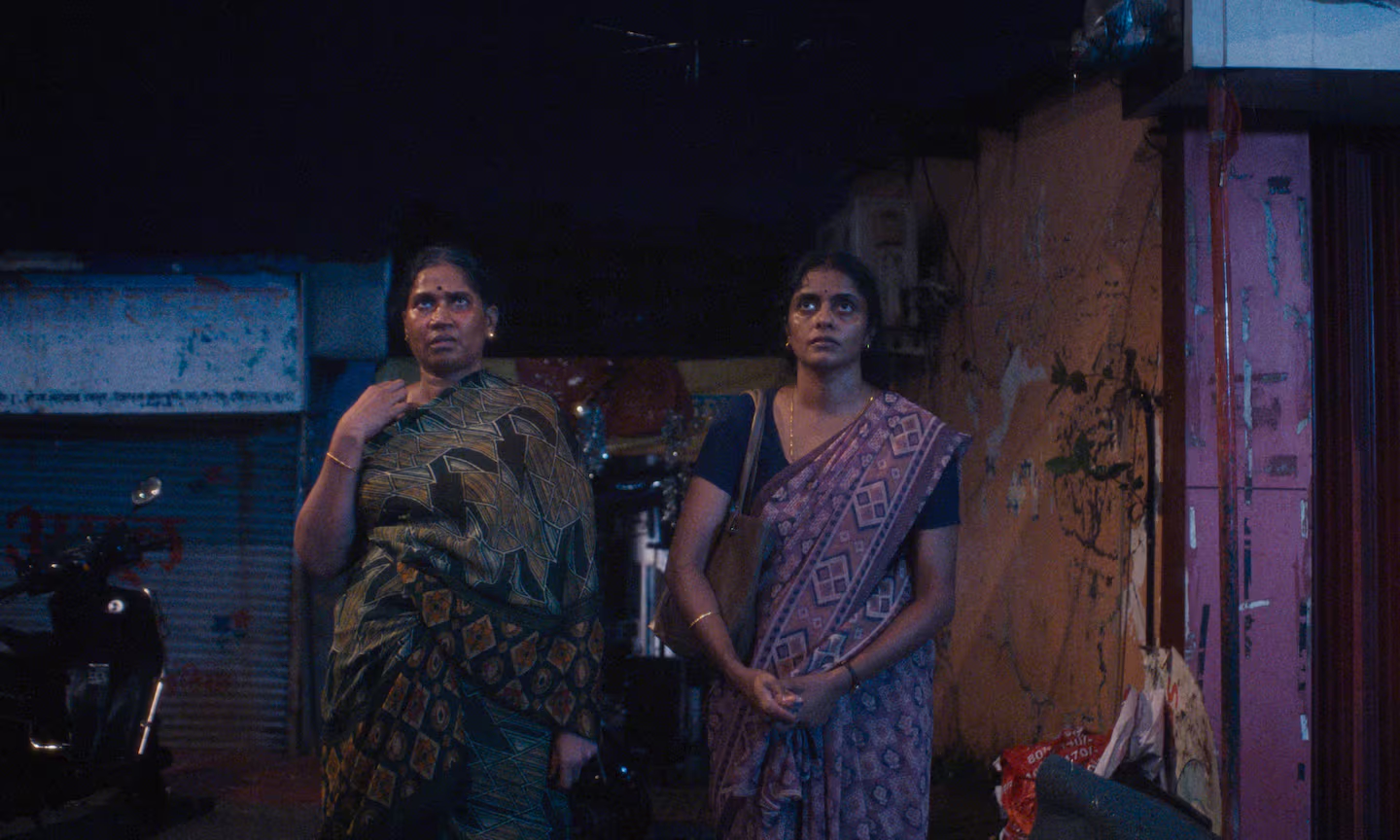
Though close, the two nurses are barely alike, apart from caring for the same pregnant cat and, of course, their friendship with Parvaty (Chhaya Kadam), a middle-aged cook, who’s introduced halfway through. With widowed Parvaty about to lose her home, the roommates are forced to set aside their disagreements and see through their friend’s bold decision. And through it all, the trio never falters. Much as tears are shed, their fortitude remains evident and the story never ventures into melodrama. It stays the tone until all roads lead to Ratnagiri, off the coast of the Arabian Sea, where the enchanting final act unfolds.

The film never asks for much. The fact that it was filmed in 40 days already serves enough hint. But as with other solemn, meticulously-told tales, it humbly requires us to absorb the subtleties and wonder at the beautiful transformations that take place. And as the sisterhood grows even more steadfast and acceptance becomes the prevailing mood, that’s when the enlightenment sinks in. Much like a tiny lit candle in a pitch-dark room, it illuminates no matter what. It’s a worthy slow burn.

 Planet Chuckie