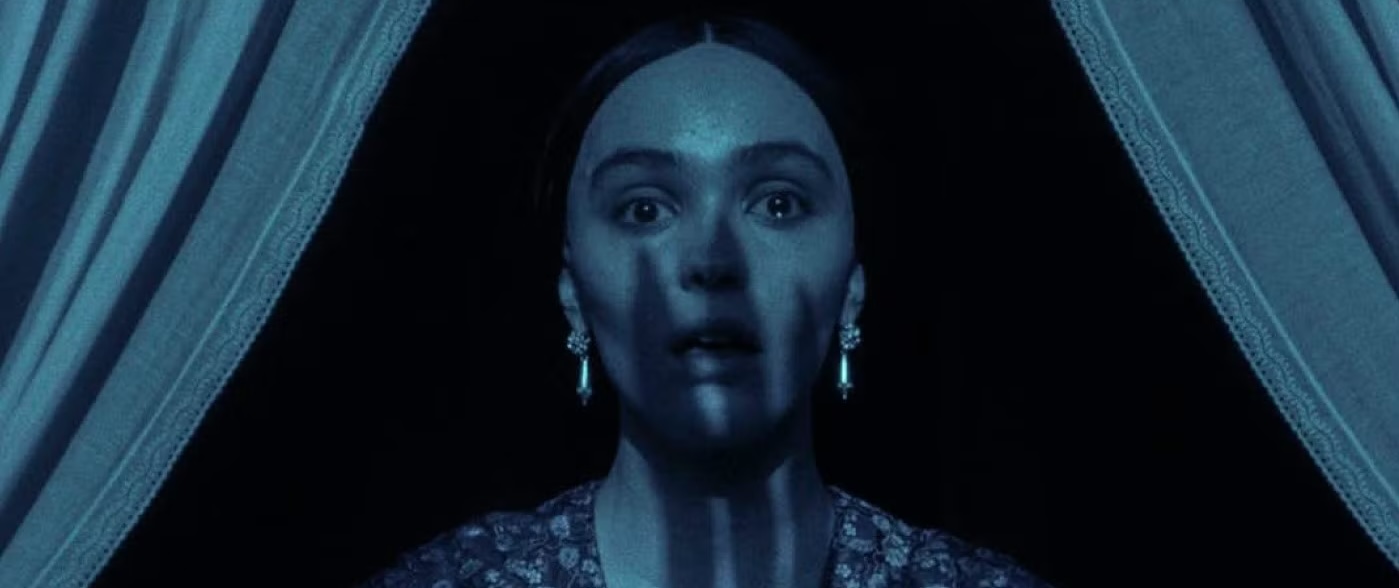

It missed the original’s centennial by two years, which is curious, given how development took almost a decade. Some might say Robert Eggers missed a shot at a timely release. Then again, it probably wasn’t his point. Maybe, he really needed all the time in the world, instead of forcing a more commemorative date. Some just prefer ideas to percolate, especially when it involves bringing a century-old classic to the 21st century.
He had just debuted with 2015’s The Witches, when the offer first came. At first, he dreaded the thought of doing the remake, and even went as far as calling it “blasphemous”. He didn’t want to take on such a huge risk so early. So, instead, he utilized the time to do 2019’s The Lighthouse and 2022’s The Northman. Good move, as it turns out. Those films became his breakthroughs.
Nosferatu: Eine Symphony des Grauens (A Symphony of Horror) wasn’t universally welcomed in 1922. Its harshest detractors were, understandably, Bram Stoker’s family, who chastised the film for ripping off Dracula. And who could blame them? F.W. Murneau hardly even made an effort to deviate from the novel and the film was still set in Transylvania. At most, he changed the character’s names. Estate agent Jonathon Harker became Thomas Hutter, his wife Mina became Ellen, her best friend Lucy Westenra became Ruth, and the nefarious vampire became Count Orlok. Serving as Orlok’s “Renfield” was Herr Knock, who’s introduced as Hutter’s employer.
Even with Universal’s more direct 1931 adaptation somehow softening the blow, the Stokers remained relentless. They swore to destroy every known copy of the silent knockoff, which they did. All succeeding copies from home video to uploaded files were, in fact, lifted from a surviving bootleg – one that had been haphazardly re-scored, with the names now matching that of the novel’s. To sum it up, Orlok became Dracula again.
Nevertheless, Nosferatu became a genre staple and made permanent contributions to vampire lore (Hint: they sure don’t sparkle). The film spawned a 1979 Werner Herzog remake with Klaus Kinski as the famed bloodsucker, while 2000’s Shadow of the Vampire was based on the making of the original. For that, Willem Dafoe donned the legendary prosthetics to play Schreck. Aptly enough, that very actor rejoins the fray, as Eggers finally takes on the challenge. One can say it was worth the wait.
This version still borrows from Stoker’s novel, with an extra hour to boot. Surely, the elongated running time’s bound to have repercussions. Thankfully, the atmosphere’s enough to keep one mesmerized, thanks to Jarin Blaschke’s cinematography and Craig Lathrop’s production design. Even in its slowest moments, the film rarely feels like a drag.
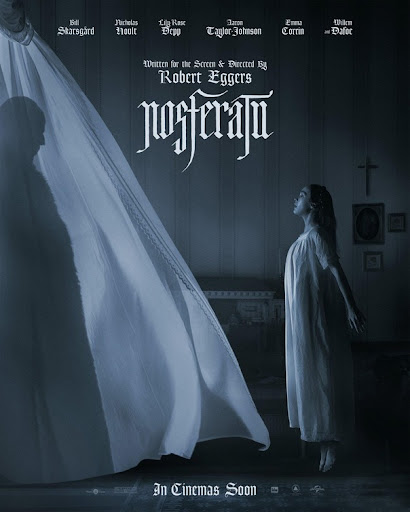
Lily-Rose Depp takes on Ellen, in a more prominent role. 10 years in the business and it’s the most demanding turn for Johnny’s daughter. Evidently, she’s now more seasoned, in a script that no longer requires her to just walk in a trance. She’s also made to channel Linda Blair. Creeping towards the window, in a nod to an iconic scene, she pines for an unseen, supernatural force. That’s when the monster is awakened. Cue the title card.
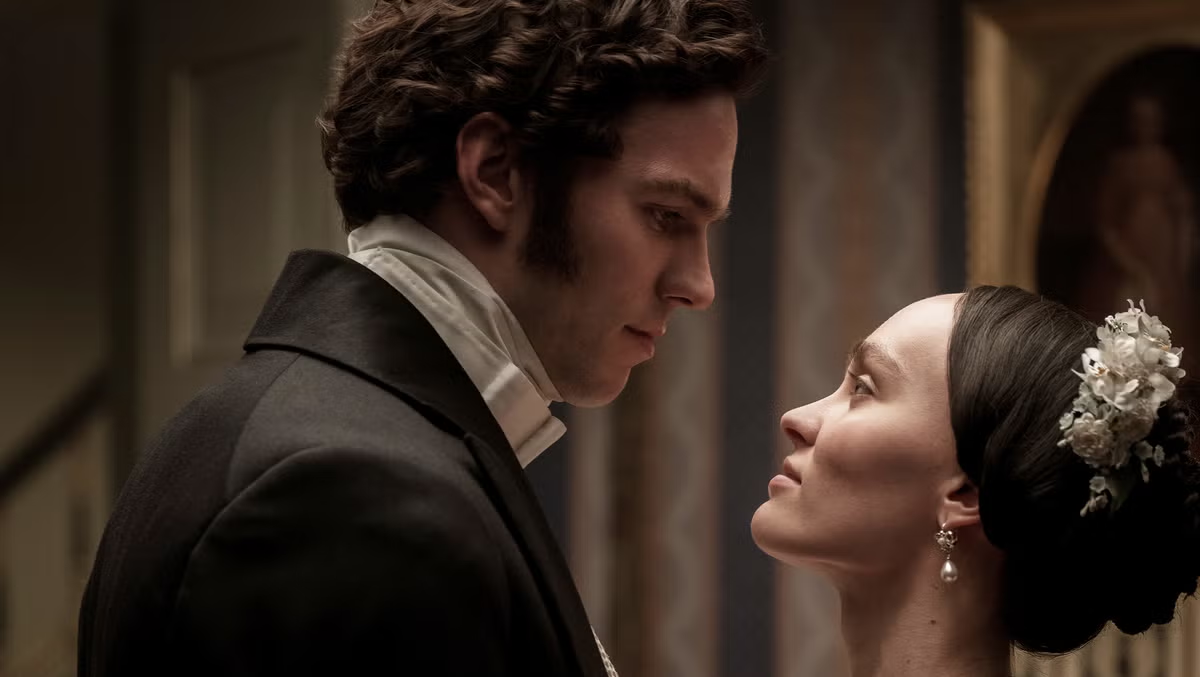
“Germany” wasn’t a name yet in 1828. Nonetheless, they establish it as the story’s setting, pedants be damned. At that point, we learn Ellen just got married to Thomas, played by Nicholas Hoult, who sure maximizes his expressive face. As Thomas is sent to that fateful assignment, Ellen’s left in the care of their best friends, Friedrich and Anna Harding. Aaron Taylor-Johnson and Emma Corrin certainly make the most out of their roles, both reimagined from previous characters. Here, they’re parents to two daughters who can seemingly have amplified third eyes. Apart from lending strong support, their expanded roles are crucial to the grisly developments that await.
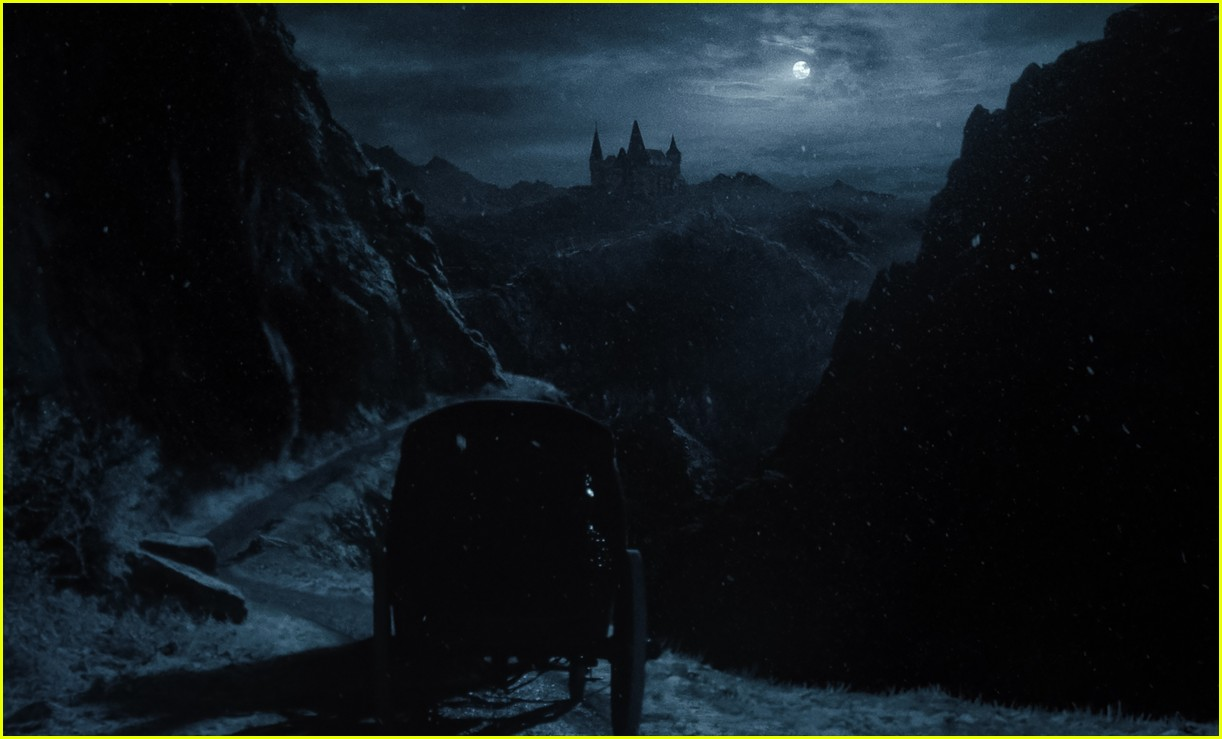
As Ellen continues to be haunted, Thomas encounters his share of horrors. Along the way, he witnesses grotesque rituals performed by gypsies, which proves to him that vampires exist. But that none of that compares to what unfolds in Orlok’s castle.

Bill Skarsgård feels like a no-brainer. He has, after all, proven his mettle by introducing It’s Pennywise and The Crow to modern audiences. While Schrek’s take remains the stuff of celluloid nightmares, Skarsgård effectively makes Orlok his own with his towering physique and the additional monstrous details. It’s said to be the closest any movie ever got the novel’s description of Dracula. It’s far more imposing than Bela Lugosi’s demonically dapper portrayal. And it’s definitely lightyears more menacing, as, here, he bites through the chest and not the neck. Watching him unleash the plague in Wisberg is like a Gothic monster-on-the-loose caper, which amplifies the thrill. To the rescue now is Dafoe’s character, the famed occultist Professor von Franz.
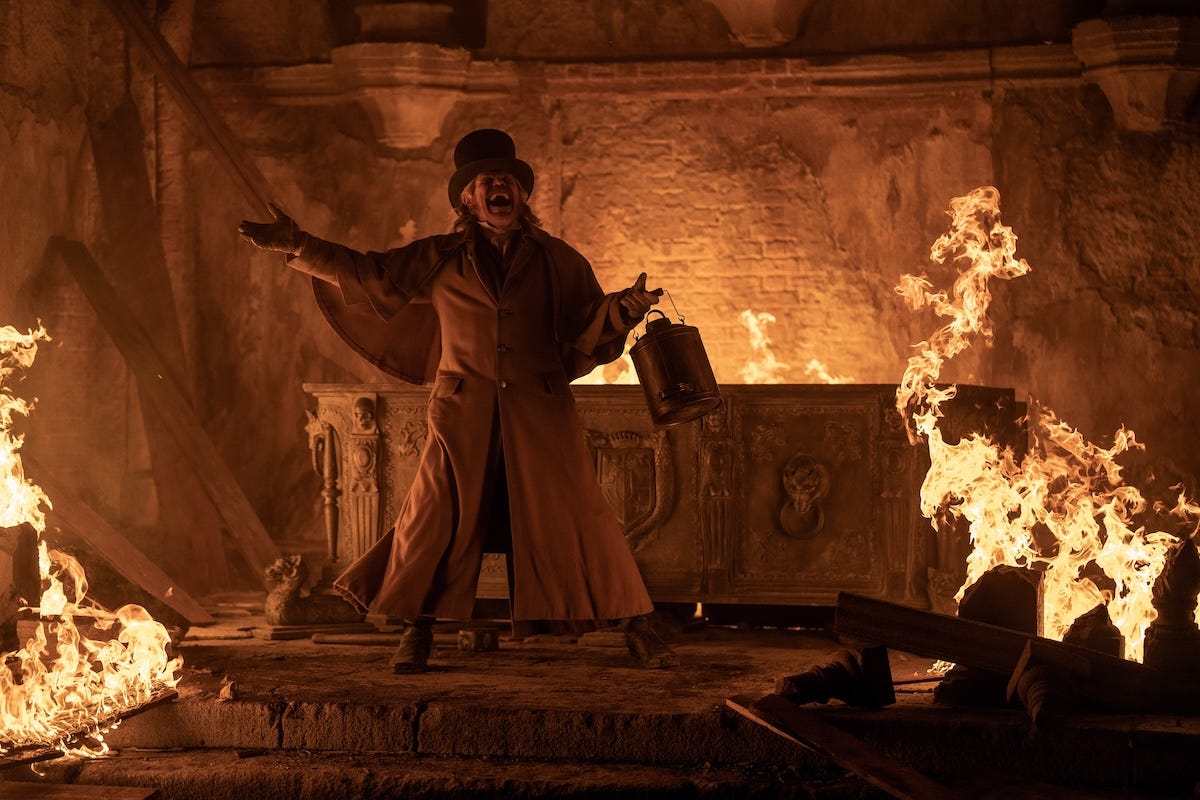
In spite of its elegant treatment, the film never holds back. Defenseless side characters are slaughtered in full view, and let’s just say necrophilia also comes into play. The sensualities once implied in previous renditions are also fully showcased here, especially when Ellen succumbs to the forces. Trust Eggers to get away with throwing away subtlety, while still staying calculated and precise. Come to think of it, he’s never about the jump scares, but about horrific images that linger. Only here, it’s multiplied tenfold. While the century-old original will always remain a standard, this one leaves its own mark. That’s when you know a remake works, when it makes an impression without tainting the source.
 Planet Chuckie