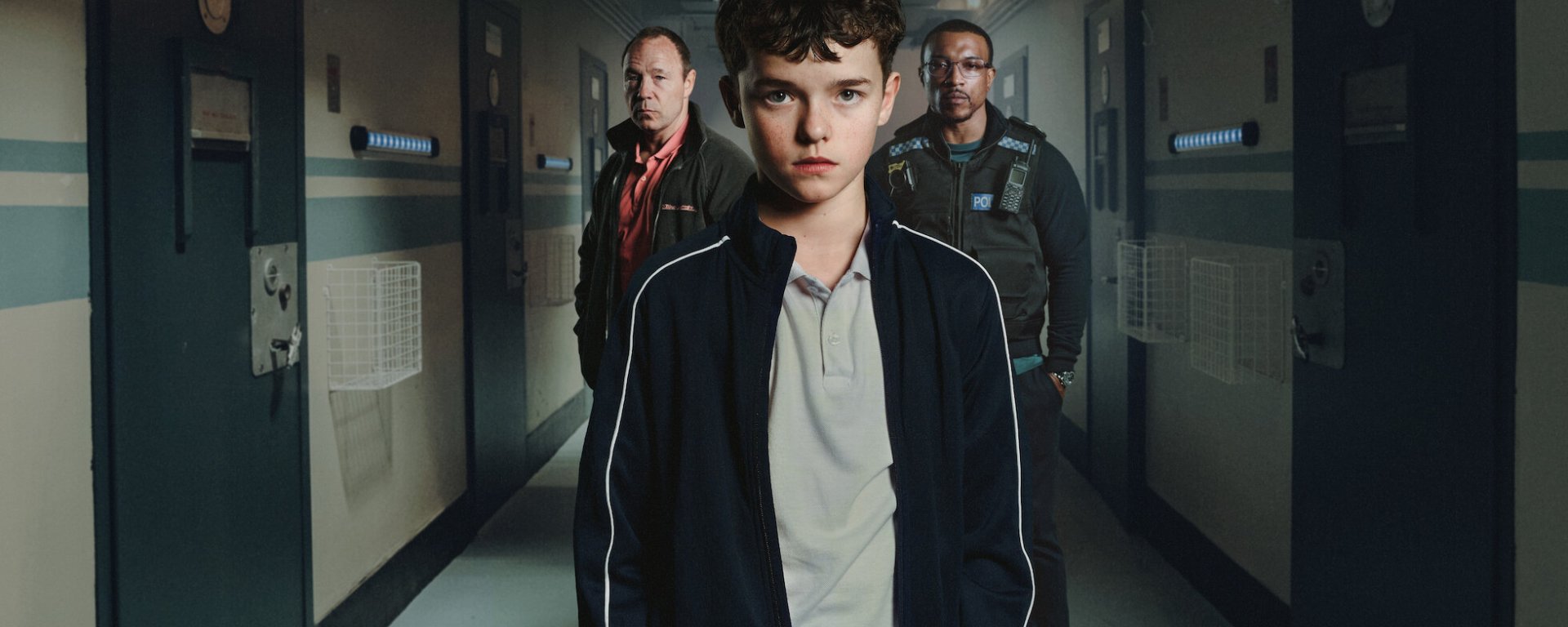

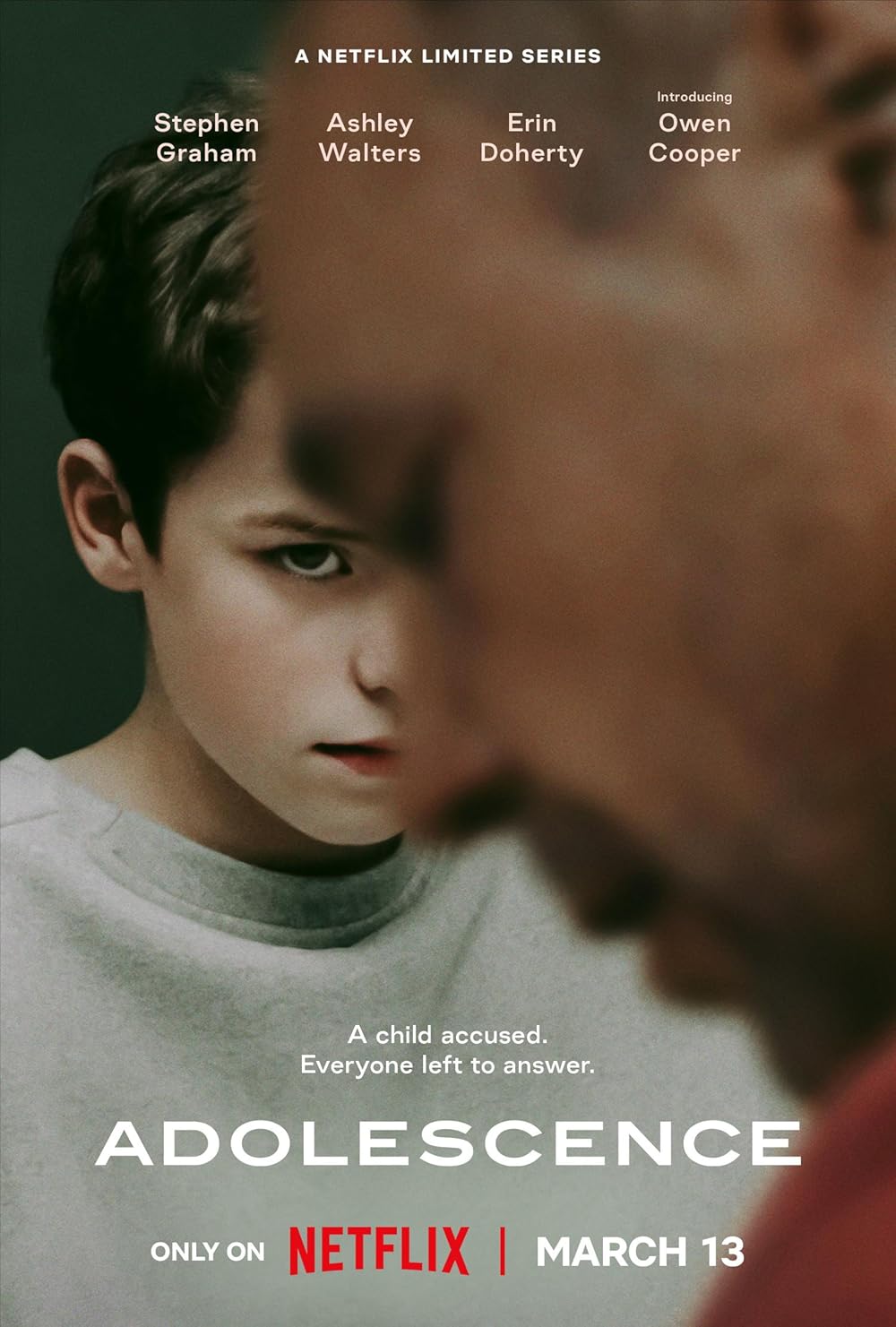
Its brilliance begins with its broad title. The British mini-series Adolescence depicts exactly what you’d associate with the word, from schoolyard bullies to grappling with repressed emotions. A quarter of it also happens on campus, which, admit it or not, can feel like prison to the socially withdrawn. The main character is, for one, which accounts for why we’re witnessing this mess. And much as the show ticks all those boxes, plot-wise, it’s far from fluff. The fact it begins with police raiding a house already sets that straight. It’s as bleak as it gets. In the first place, no one required coming-of-age stories to strictly be escapist fare or, for that matter, comfortable to watch. This one relentlessly goes for the extremes.
The show centers on Jamie Miller (newcomer Owen Cooper), a 13-year-old accused of murdering his classmate, Katie Leonard. What’s preceded by a casual daybreak conversation between two cops leads to his arrest. No family would ever dream of witnessing its youngest member subject to such, but there they are, arms in surrendering position as the authorities escort their teen away. Thus begins the immersive and inventive probe into Jamie’s psyche, and subsequently, that of his investigators and his family. It’s more than enough to keep us hooked, despite the creeping snail pace.
Filming with one continuous shot isn’t exactly novel. The technique has been employed for decades, from as early as Alfred Hitchcock’s Rope in 1948 to as recent asAlejandro Gonzales Iñárritu’s Birdman in 2014. But, often, it’s not so much about the newness, but about innovative execution. Episode One already establishes that pace, with the camera ceaselessly rolling from the opening police car sequence to the primary interrogation, where CCTV footage of the crime is first shown. Early on, we already reach that turning point. That much as we’re conditioned to root for Jamie, that’s clearly him in the clip. And, clearly, creators Jack Thorne and Stephen Graham show no intent to sugarcoat, especially with the latter’s turn as Dad, Eddie. The moment “What have you done?” escapes his lips, we’re already up for devastation. With the succeeding episodes set in different locations, the shooting method’s put to the test – which it passes with flying colors.
Episode Two takes place in Jamie’s school, three days after his arrest, where the two cops DI Bascombe (Ashley Walters) and DS Frank (Faye Marshy) resume their investigation. It’s a longer walk in the woods than expected, with both parties’ respective friends either breaking down at every turn, like the victim’s friend Jade (Fatima Bokang), or fleeing attempts at inquiry, like the suspect’s friend Ryan (Kaine Davis). It’s a chilling depiction of the modern youth’s struggle to both communicate and process tragedy. Though it’s briefly cushioned by Bascombe as he finally breaks the ice with his own son, Adam (Amari Bacchus). Much as there’s comfort seeing one family on the mend, there’s that gnawing sense that another one’s on the cusp of decline. The episode ends with the show’s best display of camerawork, as we segue from following characters around to suddenly hovering above the vicinity. Obviously, they ended that take by mounting the camera to a drone, achieving that breathtaking aerial shot. That’s before the camera lands on the scene of the crime, now adorned with tribute bouquets.
Episode Three was the first one filmed. Ergo, it’s also the first time newbie Cooper did any form of onscreen acting, which makes the tidbit more incredible. He is, without question, a prodigy, as he nails both nuances and mood shifts in this gripping sequence. Set in a youth detention facility seven months later, it’s the most time we spend with Jamie as he meets with forensic psychologist Briony Ariston (Erin Doherty). It calls to mind a similar chapter in Monsters: The Lyle and Erik Menendez Story, which likewise takes place in a session. While that example was more static, this one more fluidly circles around its subjects, making it more nauseating and claustrophobic. As Jamie inadvertently exposes his triggers and misogynistic leanings, even Briony loses composure. Presumably, so do viewers as the punches just keep on landing.
The final episode takes us back to the Millers’ home 13 months later, the day Eddie turns 50. While the family soldiers on without Jamie, the mood is far from celebratory. This is further aggravated by Eddie’s van being defaced by young hooligans. The succeeding hardware store run reveals more after-effects, with strangers giving unsolicited advice and Eddie’s temper now mercurial than ever. The final blow, however, happens during the drive home. As the Millers hear from their absent member, they’re left with no recourse but to pick up the pieces. It particularly dawns on Eddie, who realizes that it’s not hope fueled him, but denial.
Adolescence transcends its title, because, truth be told, the impact spills over to other generations with even more shattering results. In a microcosm, the show mirrors society’s decline. So much trauma is left unaddressed, tragedy becomes an incidental side effect, leaving almost no room for compassion and sympathy. It’s a reminder that even with utmost care and protection, inner demons can still unknowingly strike – often at the expense of one’s innocence. The worst part is everyone else is reduced to on-lookers, numbed to the pain and indifferent to the suffering. But who can blame them, for they’re just as entitled to function and survive?
The remaining minutes take us back to where the plight began – in Jamie’s room, supposedly his sanctuary, but God knows what dark thoughts he harbored in there. Watching the finality sink in is more than cathartic; it’s spirit-crushing. It’s nothing the end of Episode One already hinted at, when Eddie first saw the footage. This time, however, it’s no longer shock that becomes evident, but surrender and self-blame. Just the same, it will shatter you.
 Planet Chuckie