
It could have passed for a folk tale, given how it glossed over tragedy with majestic Old West vistas. But, in truth, Denis Johnson’s Train Dreams was first published in 2002 and reworked into a novella in 2011. Both versions collectively amassed accolades, with the Paris Review version winning the O.Henry Award and the Agha Khan Prize within its first year and the book earning a Pulitzer nod in 2012. Sadly, Johnson managed to release only one follow-up novel since. He succumbed to liver cancer in 2017.
Obviously, the story couldn’t be left unadapted. That’s Clint Bentley’s cue to reunite with Greg Kwedar for the screenplay. It’s their first since the Oscar-nominated Sing Sing, except, this time, Bentley’s at the helm. Capturing the lush scenery is cinematographer Adolpho Veloso, who clearly maximized the 29-day schedule. Providing the musical score is The National’s Bryce Dessner, with Nick Cave crooning the theme. And completing the mood as narrator is actor Will Patton, who also voiced the audiobook.
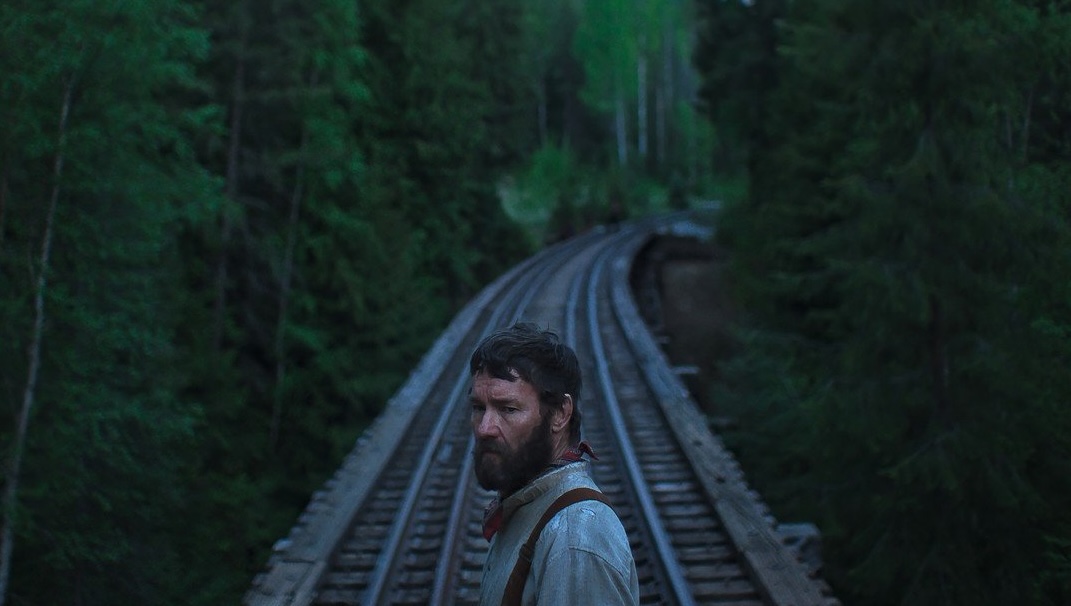
It’s easily a career high for Aussie actor Joel Edgerton, who marks his first U.S. lead role since Loving (2016). Here, he plays the orphaned Robert Grainier, who builds a solitary life in Bonners Ferry, Idaho and marries Gladys Olding (Felicity Jones). After settling in a riverside cabin, he resumes work as a railroad engineer, even if it means being away from his daughter, Kate, who grows each time he visits.
He should be witnessing his toddler’s milestones. Instead, he’s stuck in the wilderness, witnessing hate crimes and freak accidents while counting the hours. On the upside, he’s in great company, particularly the old-timer Arn Peeples (a brilliant but brief turn by William H. Macy). Tragedies soon strike, both onsite and back home, with everything he built left in shambles. Distraught, Robert continues work until Father Time eventually catches up and is forced back into hermititude. Even an encounter with an attractive forestry services worker (Kerry Condon) feels passing.
Terence Malick was cited as inspiration for this piece. The influence is palpable, with dream sequences that scream “The Tree of Life” and montages that blur the line between truth and hallucination. All this is achieved, thanks to Bentley’s direction and Parker Lamarie’s editing.
As the 80-year spanning tale draws to a close, the quest for clarity takes a backseat. That is, perhaps the main takeaway from the source material. Life neither guarantees definite conclusions nor does it even have to make sense. It’s an eerie parallel, given how the author left the world before 70. To paraphrase a line, it doesn’t matter if life makes us feel we’ve “misplaced all sense of up and down”. What matters is feeling “connected to it all”. It’s a message that transcends the story, which makes this journey all the more worth the surrender.
 Planet Chuckie