I was almost going to miss the live streaming of this year’s Academy Awards, but thanks to certain sudden adjustments, I was able to stay at home for the entirety of the show.
Fortunately, the Disney+ streaming didn’t encounter difficulties like how the Hulu streaming cut the ceremonies abruptly in the US, so I was able to watch all three hours and fifty minutes of it without a hitch. So, without further ado, here’s my take on the highlights:
A WICKED OPENING. In a year two musicals (and a Bob Dylan biopic) conquered the nomination tally, it’s ironic that performances were kept at a minimum. It’s no surprise that Wicked was still deemed worthy of air time. Even if the source material starts in Kansas, the Oz-themed anthems still thematically aligned with the Los Angeles tributes. And suddenly, at least for this number, the songs hit differently.
Ariana Grande started with Somewhere Over the Rainbow, which echoes the residents’ yearning for a safer haven. Then, there was Cynthia Erivo evoking all sorts of nostalgia with “Home” from 1978’s The Wiz. And as the duo inevitably (and predictably) transitioned to “Defying Gravity”, the mood was effectively set. Much as they never had a shot in their respective categories, they still got to steal the show early.
As for Jon M. Chu’s take on the hit musical itself, it later scored two wins with Nathan Crowley and Lee Sandales winning Best Production Design and Paul Tazewell making history as the first black man to win Best Costume Design.
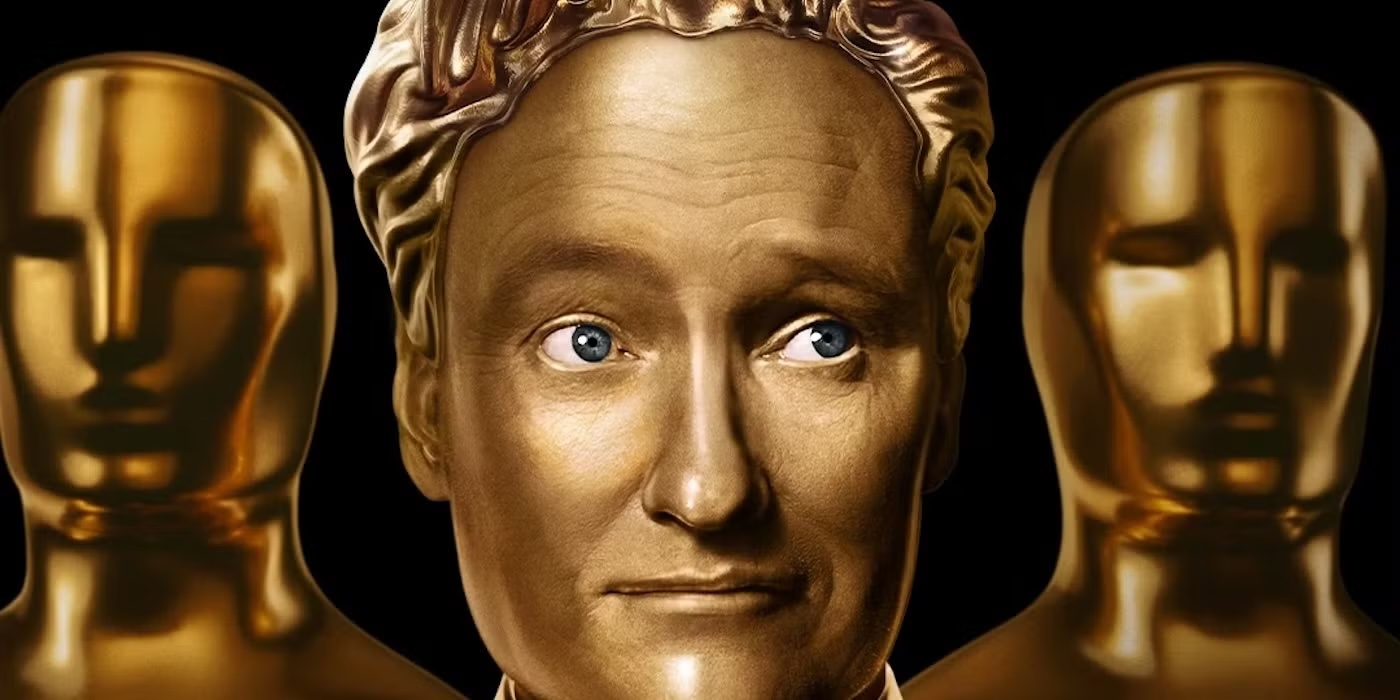
CONAN’S QUIPS CONQUER. Most beloved predecessors have tried but stumbled. That includes Billy Crystal in his latter go-runs, and let’s not get started with Seth McFarlane. Nevertheless, Conan O’Brien scoring the gig piqued curiosity at best. Besides, there’s a reason he once dominated the midnight time slot and his Emmy hosting stints were once widely praised.
Thankfully, the first time Oscar host exceeded expectations, with his rapid-fire deliveries that called to mind his Late Night hey day. The comedian opened the show with his signature schtick, from spoofing The Substance to roasting nominees like Ralph Fiennes, Timothée Chalamet, and most especially, the controversial Karla Sofia Gascon. It was a killer 18-minute monologue, that employed Adam Sandler dressed in shorts and involved a piano-playing Sandworm and Dancing Deadpool in the sarcastic song number “I Won’t Waste Time”.
Not all jokes were bound to land (did he really have to drag in the Greater Los Angeles Firefighters that way?). But with every quip that fell flat, he recovered swiftly with his goldmine of punchlines. Overall, it was an impressive first run for the comedian and it hopefully won’t be his last.
“HOME ALONE” ALUMNUS SCORES HOME RUN. One nominee who probably worried least about his prospects was A Real Pain’s Kieran Culkin, who’d practically swept this category since last January’s Golden Globes. True enough, he started the night by nabbing the Best Supporting Actor trophy with ease and pretty much echoed his winning character throughout his bleep-worthy speech. Shoutouts went to his co-star and director Jesse Eisenberg and his former Succession co-star turned fellow nominee Jeremy Strong, among many others.The real punchline, however, came when he reverted to his 2024 Emmy speech about his wife promising him a third child if he won that year. Long story short, she now owes him a fourth.
ANIMATION CATEGORY MILESTONES. Despite a perceived lock for The Wild Robot, Flow still managed to replicate its Golden Globe feat and win Latvia its first Oscar. Then, there’s previous winner Iran, which finally struck gold in the Animated Shorts category with the silent stunner, In the Shadow of the Cypress. During their acceptance speech, the filmmakers Hossein Molayemi and Shirin Sohani revealed they only arrived three hours prior to the ceremony after receiving the US visas the day before. However, it was their dedication to those “fighting their inner and outer battles heroically” and “…Iranians still suffering” that had the room close to tears. With this win, the married couple now joins their compatriots Asghar Farhadi (International Feature, 2012 and 2017) and Rayka Zehtabchi (Documentary Short, 2019) in raising the flag for their country’s filmmakers.
PAPAL PARALLEL. A sudden upset wasn’t far-fetched, given how Conclave eerily echoes Pope Francis’ ongoing health plight. While that didn’t end up transpiring, the papal thriller did win Best Adapted Screenplay, as generally foreseen. It’s the first Oscar for writer Peter Straughan, who based the script on Robert Harris’ 2016 novel. He was previously in contention for 2011’s Tinker, Tailor, Soldier, Spy.
SHOEHORNED SPY TRIBUTE. So what exactly was that James Bond tribute commemorating? Is it Thunderball’s 60th anniversary? A View to a Kill’s 40th? Goldeneye’s 30th? Heck, Spectre’s 10th? Then again, those were lesser entries and none of their themes were even performed. Really, this had more to do with outgoing 007 producers Michael G. Wilson and Barbara Broccoli being bestowed with the Irving G. Thalberg Memorial Award last November. Whatever the case, the production number still felt arbitrary, with The Substance’s Margaret Qualley joining the back-up dancers as a Bond Girl (could she be one soon?). The medley then commenced with Blackpink’s LISA taking on “Live and Let Die”, Doja Cat sassing up Shirley Bassey’s “Diamonds Are Forever”, and RAYE doing some justice to Adele’s “Skyfall”. The covers were decent, but it was hard to justify the whole bit without thinking about the imminent Amazon takeover.
SALDAÑA SIZZLES. Despite murmurs of Isabella Rosellini or Ariana Grande potentially scoring upsets, Zoe Saldaña still managed to secure her clean sweep and become the first Oscar-winning actress of Dominican descent. It’s a fact she didn’t hesitate to share, as she called for her “Mami” upon taking the stage, before proudly honoring her immigrant roots and honoring her husband’s luxurious hair.
It’s as triumphant as the evening could get for beleaguered nominee Emilia Pérez, which also secured Best Original Song for “El Mal” (Meanwhile, still none for Diane Warren). Yet, even in supposed redemption, the film still somehow triggered observers. None of its winners bothered to acknowledge the trans community in their speeches. Isn’t that part of what the film’s supposed to lobby for, Karla Sofia Gascon’s scandal aside?
NOT TO BE SILENCED. Even with Porcelain War winning the DGA equivalent, the Documentary Feature race still felt like No Other Land’s to lose – despite having no US distributor. Though set way before the Hamas attacks, seeing Palestinians and Israelis unite to tell the story, nevertheless, makes a compelling point. As the four filmmakers took the stage to accept their award, their voices were amplified anew.
“No Other Land reflects the harsh reality we have been enduring for decades and still resist as we call on the world to take serious actions to stop the injustice and to stop the ethnic cleansing of Palestinian people”, said Palestine’s Basel Adra. After which, his friend, Israeli journalist Yuval Abraham continued with “We created this film together, Palestinians and Israelis, because together, our voices are stronger…” “Can’t you see that we are intertwined? That my people can truly be safe if Basel’s people are truly free and safe”, he then added, making a plea for more unity. Make what you can out of the crowd’s stunned reactions, the message clearly hit home.
DUNE TWO TAKES TWO. Unlike its predecessor, Dune: Part Two entered with steeper odds – even in the races it was expected to lead. Fortunately, the sci-fi epic didn’t only bag Best Visual Effects, as expected. It also defied Wicked’s gravity by winning Best Sound. At least Timothée Chalamet can rest easy knowing at least one of his films didn’t leave empty-handed.
GODSPEED, GENE HACKMAN. If not for the suddenness of Gene Hackman’s mysterious passing, he would have warranted a longer, more full-blown tribute. Remember, he’s a legend and a two-time Oscar winner himself. It’s understandable they had to make do with a quick heartfelt word from his Unforgiven co-star Morgan Freeman, as he introduced the In Memoriam segment. But even if they did manage to add Hackman to the tribute montage, eagle-eyed observers still noticed glaring exclusions. Among those missing were Olivia Hussey from 1968’s Romeo and Juliet, Bernard Hill, from both Titanic and LOTR, Heathers’ Shannen Doherty, and, just as recently, Harriet the Spy’s Michelle Trachtenberg. Much as they’re included on the website, along with the Philippines’ Jaclyn Jose, it still feels off that they’re left out of the telecast.
BRAZIL’S BREAKTHROUGH. It’s been established that Emilia Sanchez already blew its chances, even with 13 nods pegging it as the one to beat. Lo and behold, voters flocked towards Walter Salles’ I’m Still Here instead. It shouldn’t be much of a shocker, though, considering how it started the race as Brazil’s first ever Best Picture nominee, with Fernanda Torres replicating her mother and co-star, Fernanda Montenegro’s 1999 Best Actress nod. Now, it’s the first International Feature win for the country and, for that matter, the Portuguese language.
A QUEEN HONORS QUINCY. We can forgive the downplaying of A Color Purple’s 40th anniversary, even though Whoopi Goldberg and Oprah Winfrey were just right there. Their task, after all, was to introduce a tribute to departed legend Quincy Jones. Previous nominee Queen Latifah then did the honors by covering The Wiz’s “Ease on Down the Road”/ It was a jovial, high-spirited number, which sadly, felt rather truncated. Compare that to the how Grammys mounted it last month. Now, that was a star-studded spectacle.
TWICE THE CHARM, TWELVE YEARS LATER. In 2003, Adrien Brody became the youngest ever Oscar-winning Lead Actor at age 29, a record almost equalled by A Complete Unknown’s Timothée Chalamet granted he’d parlay that SAG upset here, which he didn’t.
The Brutalist ended the night as the second biggest winner, with prior wins for Best Cinematography and Best Score. With Brody regaining his season momentum, he replicated his Pianist win and set another record with his nearly-six-minute acceptance speech, play-off music be damned. No nonconsensual lip-locking happened onstage this time. Though Halle Barry did have her revenge, earlier, on the red carpet.
DEMI DOWNER. It was supposed to be the perfect ending to Demi Moore’s redemption story. What started with the self-described popcorn actress earning her overdue shot at the Golden Globes snowballed into more poignant victory speeches, from Critics’ Choice to Screen Actors Guild. Somehow, that trajectory had us convinced that, even with her BAFTA loss, her stakes remained rather certain. Alas, in a scenario echoing the very film she was nominated for, the accolade went to a much younger neophyte who, well, didn’t even emerge from her spine. Moreover, it was the same young lady who pulled the said BAFTA upset.
It was truly one of this year’s most heartbreaking shockers, considering the near-spotless streak that preceded it. While Coralie Fargaet’s The Substance did win Best Make-Up and Hairstyling, a Best Actress Oscar win could have perfectly concluded its awards season run. But then, it only further reinforces the Academy’s reputed aversion to horror. While Kathy Bates and Jodie Foster did win for Misery (1990) and Silence of the Lambs (1991), respectively, those films were more dramatically thrilling than straightforward scary. Demi’s jaw-dropping loss only hints that the trend continues. And given the newsworthy stories that might have followed, it was a missed opportunity on many counts – just like how they missed the opportunity with Native American Lily Gladstone last year.
MIKEY MADISON’S MOMENT. Then again, it was also hard to root against the eventual winner and, in hindsight, perhaps that BAFTA win was the ultimate clincher. Before Anora, Mikey Madison’s filmography highlights were limited to bit parts in Quentin Tarantino’s Once Upon a Time…in Hollywood (2019) and Scream V (2022). It was Sean Baker who gambled on the LA-born ingenue and made her his muse in what would eventually be his biggest film yet. Obviously, the risk did pay off. And much like her character Ani, Mikey’s suddenly living her own Cinderella story.
As she clutched her Best Actress statuette in disbelief, she shared her humble roots. “I grew up in Los Angeles, but Hollywood always felt so far away from me”, she began, before thanking her family and film colleagues. Halfway through, she also didn’t fail to thank the sex worker community, the very inspiration behind Ani, swearing she’ll “…continue to support and be an ally.” As she concluded her speech, she once again emphasized the fairy tale twist of it all, saying “This is a dream come true; I’m probably gonna wake up tomorrow.”
Heartbreaking as it was to not see Demi Moore on stage, it was still a refreshing (if not shocking) result. It’s a sign that, somehow, the Academy’s looking in other directions – even if it’s not the direction most of us had hoped.
SEAN BAKER SCORES FOUR. But the night’s biggest winner, bar none, was Sean Baker, who started the evening as a complete Oscar newbie and ended it with four statuettes – the most for any individual for a single film and year. And, take note, even Walt Disney had multiple entries when he once achieved a similar feat.
Being the producer, director, editor, and screenwriter of Anora made this quadruple win possible. The filmmaker exuded loquacious giddiness in each of his four speeches. The most salient message, came during his Best Director speech, when he pled to preserve the cinematic experience, describing it as “communal” and one “you don’t get at home”.
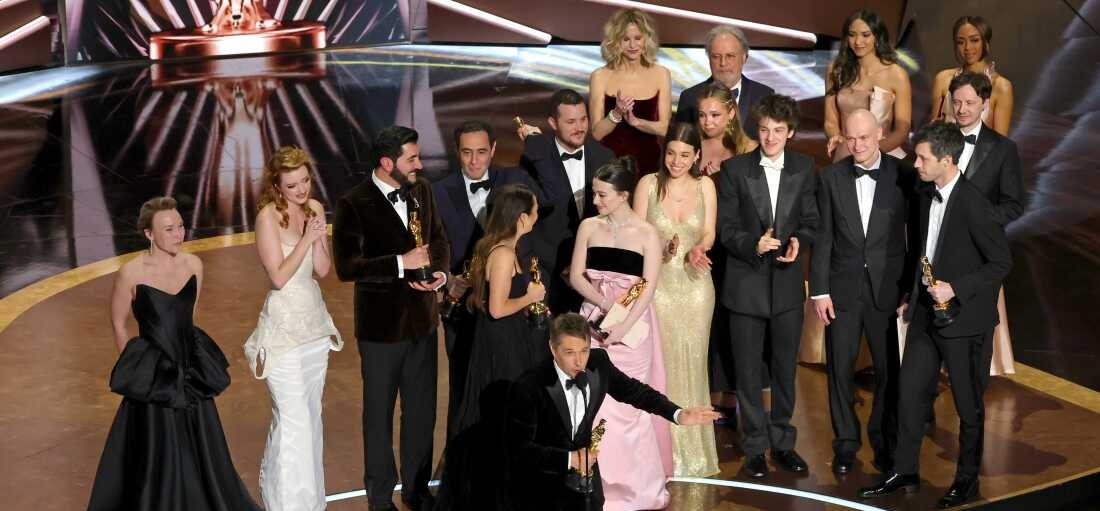
As he took the stage one last time, this time with the entire team, to accept the Best Picture award, he thanked the Academy for all the honors bestowed on his independent film. That’s when he proceeded to share the victory with his fellow “incredible indie artists”.
“Long live independent film” indeed.

