
They called the original “Walt Disney’s Folly”, because everyone was convinced that any cartoon longer than Silly Symphonies was doomed to fail. They were wrong, of course. Not only did “Snow White and the Seven Dwarfs” earn more than all 1938 cinematic releases combined, it’s also why we have full-length animated features. Enumerating the offshoots would be futile. Point is, it spear-headed a genre.
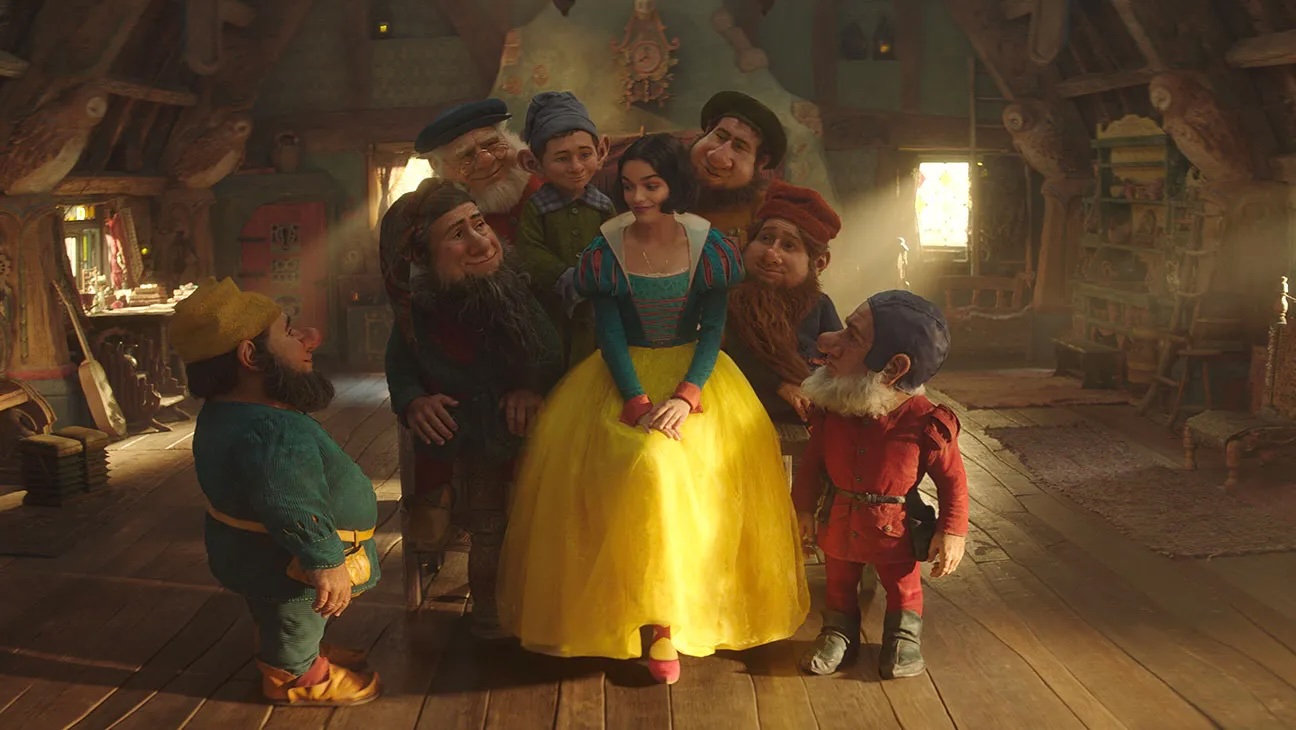
87 years later, we now have Marc Webb’s live action version subject to as much pre-release vitriol, but for a slew of different reasons. Let’s start with those Dwarfs, though we hope somebody already informed Peter Dinklage that they don’t dwell in a cave (They’re miners. They work there). The real trigger here is how the beloved septet was rendered in CGI, when they could have cast real little people. Notice, too, that the title has now been reduced to just the heroine’s name. That only shoves them further into the background, with their roles severely modified, if not reduced. Grumpy no longer stands out, while the rest aren’t even granted memorable one-liners. At least, Dopey gets a welcome upgrade, even if this incarnation looks like MAD Magazine’s Alfred E. Neumann.
It’s tiresome to discuss ethnic switcheroos at this juncture. It’s been done before. The Little Mermaid and Peter Pan have since been absolved. And, if we dare cite examples from other canon (and studios), Rodgers and Hammerstein’s Cinderella with Brandy and Whitney Houston was a smash in 1997. And there was that HBO series,“Happily Ever After”, which re-imagined virtually every beloved character as a person of color. And, in case you’re wondering, the Snow White episode rebranded the heroine as “White Snow”, following Native American naming convention. Honestly, it really boils down to performance and how well the story is retold. In many ways, this one doesn’t.
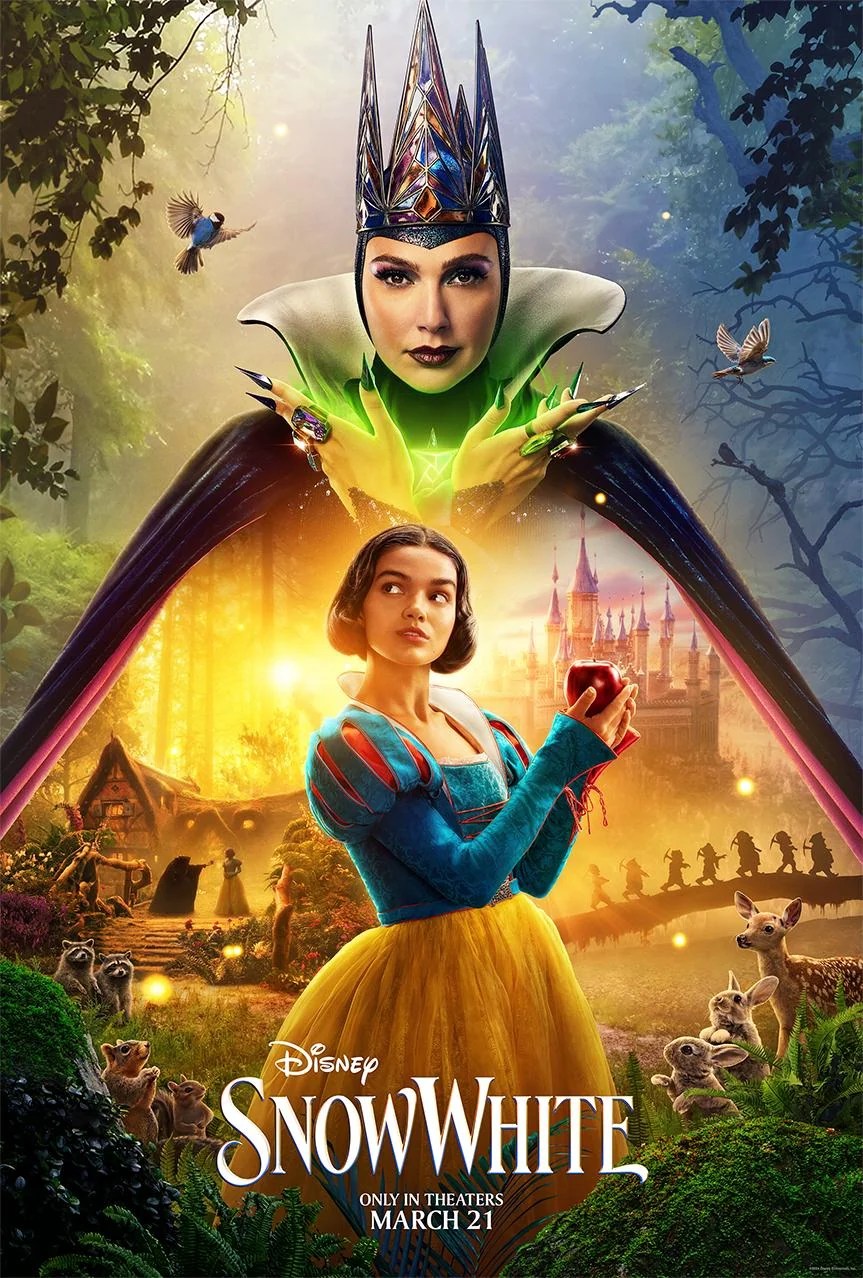
So how exactly do they address having a Latina in the title role? Well, for one, she’s no longer named after her complexion, but from her parents surviving a harsh blizzard. So, gone is the “skin as white as snow” rhetoric and “fairest” now broadly alludes to justice and righteousness. It’s no longer just about beauty, but also about influence. And to Rachel Ziegler’s credit, she ever does give her all. Memes aside, she dazzles when it counts, especially in the new song number, “Waiting on a Wish”. And speaking of songs, only “Heigh Ho” and “Whistle While You Work” find their way back intact, but with few modifications. The Yodel Song was at least sampled, while the iconic “Someday My Prince Will Come” was completely axed, given that the romantic interest is no longer a Prince, but a rebel named Jonathan (Andrew Burnap).
Gal Gadot isn’t the worst part of this remake, despite the ever-wooden acting and the borderline laughable “All is Fair”. One can argue that she almost nails Lucille La Verne’s monotone delivery, except maybe less menacing and definitely less expressive. What puzzles, though, is her abrupt shift from obsessive vanity to lust for absolute rule. At some point, no Magic Mirror could decipher what exactly motivates or threatens her. The political angle felt painfully forced, as with many other changes.
Controversies notwithstanding, it’s really the forced modifications that confound – as if they didn’t learn anything from 2012’s “Mirror Mirror” and “Snow White and the Huntsman”. Yes, The Brothers Grimms’ tale was shallow and simplistic, but, for Pete’s sake, it was a product of 1812 (Also: read their more disturbing lesser-known stories). Some stories are too antiquated to update or even too fantastical to make real. Not everything’s as timelessly flexible as, say, Cinderella, whose rags-to-riches premise can somehow still apply today (paging Anora). Snow White’s fragile damsel-in-distress arc clearnly won’t, unless, of course, one embraces it as outdated or, in some cases, even parody. The logical fix is to make the character more headstrong, street-smart, and more discerning. But much as it’s a welcome tweak, she somehow still gets fooled into ingesting that apple.
See, that’s the pitfall in melding the archaic points of the story with modern ideologies, when they already contradict to begin with. It’s hard to buy the woke-ness, when the key premise remains stuck in old ways. It’s a Catch 22, and it makes you wonder why they didn’t just write a new story.
Overall, it’s not as terrible as the review-bombs suggest. Mortal Kombat: Annihilation and Battlefield Earth are still far worse. But as far as Disney’s recent penchant for reworks go, this ultimately still falls flat, like it succumbed to its own Sleeping Death spell, which no first kiss can ever undo. The weaker live action remakes were confusing or forgettable companion pieces. This one, however, sinks a different low. It just sucks the magic away, as if it was written with contempt to the beloved tale. Now, that’s the real Folly.
 Planet Chuckie